
Key takeaways
- International students need a valid student health insurance policy to study at a German university.
- Public health insurance providers in Germany offer discounted student health insurance policies. Students under 30 pay around 148€ per month (as of 2026).
- Students who are 30 or older when commencing their studies are not eligible for discounted student public health insurance (§ 5 and § 6 SGB V). They must get standard public health insurance or private insurance.
- Foreign students in preparatory or language courses can only get private student health insurance.
- Students from EU / EEA / Swiss countries with a valid European Health Insurance Card (EHIC) or an S1 certificate are usually recognised for coverage in Germany.
- Students cannot change from private to public health insurance or vice versa during their studies.
This is how you do it
- Students from EU member states should check if their home country’s health insurance is recognised in Germany.
- Non‑EU international students must show valid health insurance for visa and enrolment purposes. You can get public health insurance (if eligible) or private health insurance. You’ll need travel health insurance until you get full health insurance.
- We find TK the best public health insurance provider for expats. Its website, mobile app, and customer service are in English. You can register with TK online.
- We recommend getting private health insurance via an insurance broker. They are experts and can help you find the best plan for your needs. You can book a call with an expert we recommend here.
The AI overview and answers are as good as the sources it uses.
To ensure you get AI answers from a deeply researched, maintained, and up-to-date source, add GermanPedia to your preferred sources.
Is taking health insurance for foreign students mandatory in Germany?
Yes, student health insurance is mandatory for studying at a German university (§ 5 SGB V).
There are four types of health insurance
- Travel health insurance
- Expat health insurance
- Public health insurance (full health insurance)
- Private health insurance (full health insurance)
You must check which health insurance you are eligible for and that fits your needs (coverage and visa requirements).
Non-EU international students
You must have travel health insurance before flying to Germany. You need it to get a travel visa for Germany.
You can get travel insurance from your home country or a German insurer. If you opt for a German insurer, travel insurance from Dr. Walter* is recommended by insurance experts.
Once you are in Germany, you need full health insurance.
Your university will also ask for proof of adequate health insurance cover at the time of enrolment. Similarly, the foreign authority will ask for health cover proof when applying for a student visa or a residence permit.
Here are your health insurance options based on your course.
Degree university course
You can choose between public and private health insurance. Student public health insurance is usually the best choice. You can also apply for public health insurance from your home country online.
To get student public health insurance, you must meet the eligibility criteria mentioned here.
Preparatory or language course
Students on preparatory or language courses are not eligible for the public health insurance. You must get private or expat health insurance instead.
You can check expat health insurance from Feather* or Dr. Walter*. Feather and Dr Walter are insurance agents. Don’t confuse them with insurance companies.
To obtain full private health insurance, work with an insurance broker.
Students from EU / EEA countries and Switzerland
Students from EU / EEA countries and Switzerland can use their European Health Insurance Card (EHIC) for short stays. For a long-term stay, you must get an S1 certificate from your health insurer in your home country or full health insurance (private or public) in Germany.

Public health insurance eligibility criteria for non-EU international students
Students from EU/EEA member countries and Switzerland can choose between public or private health insurance. There are no restrictions.
However, if you are from a non-EU country, you must meet the following criteria to get public health insurance.
Under 30
Students who are under 30 on the date they start their studies are subject to the compulsory student public health insurance. However, you can apply for an exemption from compulsory public health insurance.
You must apply for the exemption within three months of starting the course. The health insurance company considers the enrollment date to calculate the three months (§ 5 SGB V and § 8 SGB V).
NOTE: Once you enroll in health insurance, private or public, your decision is usually binding for the rest of your studies. Switching back is only possible in narrowly defined exceptional cases.
30 or above
Students who are 30 or above when starting their studies cannot be insured with statutory health insurance. They must get private/expat health insurance.
There is an exception to this rule. You can voluntarily insure yourself in public health insurance if your resident permit is longer than 12 months.
Here is how it works.
- When applying for a student visa, you must have travel insurance or expat health insurance.
- Once you come to Germany, you must get private / expat health insurance (if you don’t have it already).
- Apply for your resident permit. If you obtain a resident permit with a validity exceeding 12 months, you can switch to public health insurance. However, you must switch to public health insurance within three months of your course start. Otherwise, you are stuck with private / expat health insurance during your course period.
Turn 30 during the course
Had public health insurance before turning 30
If you turn 30 during the course, you remain covered under the student public health insurance until the end of the semester in which you turn 30. After that semester ends, you are no longer entitled to the reduced student rate and can switch your health insurance (§ 5 SGB V).
You can continue to be insured voluntarily with public insurance or take out private health insurance.
Had private health insurance before turning 30
If you have private health insurance before you turn 30, you can continue with your private health insurance or switch to public insurance if you meet the requirements.
If in doubt, consult an insurance broker for advice.
How can you get student health insurance in Germany?
You should first check which health insurance you are eligible for (public or private) based on your age, course type, and nationality. You can apply for health insurance online directly with the provider or via insurance brokers.
How do you get student public health insurance in Germany?
- Check eligibility: Confirm you qualify for public health insurance. If you are unsure, get support from an insurance broker.
- Choose a public health insurance company (Krankenkasse): 95% of the services offered by the public insurers are the same. Thus, pick an insurer with English support and lower premiums. We find TK the best public health insurance provider for expats. Its website, mobile app, and customer service are in English. You can register with TK online.
- Prepare documents: passport, letter of admission or enrolment confirmation (Zulassungsbescheid/Immatrikulationsbescheinigung), and proof of previous insurance if available.
- Apply online or in-person: complete the online form or visit a local office. The insurer will issue a written “Versicherungsbestätigung” (insurance confirmation) or a certificate for university enrolment and visa purposes.
- After registration: The public health insurer may request further documents based on your situation. Once the insurer has all your details, you’ll receive the health insurance card (elektronische Gesundheitskarte / eGK).
Best public health insurance ->
How do you get student private health insurance in Germany?
Expat health insurance and full private health insurance are two different types of insurance. Full private health insurance offers better coverage than expat health insurance.
Students who are in Germany for a short time usually get expat health insurance as it’s more cost-effective. However, if you are in Germany for the long term, you must get full health insurance (private or public).
When are you obligated to get full health insurance in Germany ->
You can get expat health insurance or full private health insurance online from the provider or via an insurance broker.
You can check expat health insurance from Feather* or Dr. Walter*. Feather and Dr Walter are insurance agents. Don’t confuse them with insurance companies.
Insurance brokers and advisors are liable for their advice. This means that if the insurance plan they recommended doesn’t fulfill your wishes, they are liable to pay the damages.
Insurance brokers offer free advice. The insurance company pays them upon the successful conclusion of the contract.
An insurance broker can also help you file a claim with the provider. The broker we recommend has been offering services to expats for more than a decade.
Best private health insurance in Germany ->
How much does international student health insurance cost in Germany?
Public health insurance for students
You are eligible for the discounted student health insurance if you are under 30. If you are 30 or above, you can no longer access discounted student health insurance and must pay the regular premium.
The cost of public health insurance for students depends on your age and the number of children you have. The premium you pay is composed of three parts.
- General contributions (Krankenversicherung): It’s set by the government and is the same for everyone and every public insurance company. It’s 10.22% as of 2026.
- Additional contribution (Zusatzbeitrag): It’s set independently by each public health insurance provider. The Germany-wide average is 2.9% (as of 2026).
- Long-term nursing care contribution (Pflegeversicherung): The government sets it, and it varies from 2.6% to 4.2% depending on your age and number of children (as of 2026) (§ 55 SGB XI).
The public health insurance companies calculate the premium using the BAföG rate set by the German government. It is 855€ from 1 Oct 2024 and was 812€ until 30 Sep. 2024.
The table below shows the average public health insurance premium for students.
| Students age (Single and no children) | Public Health Insurance Cost |
| Up to 29 years old | 148€ per month (as of 2026) |
| 30 or older | 286€ per month (as of 2026) (assuming you earn below 1,318.33€ (as of 2026)) |
This is how the public health insurance premium for students is calculated.
| Percentage of your gross salary | Monthly premium (Age: under 30) (from 01.10.2024) | Monthly premium (Age: 30 or above) (as of 2026) | |
| BAföG rate for students (This is the rate used to calculate student health insurance premiums) | 855 €* | Student rate no longer applies. Premium depends on your income. The minimum income considered is 1318.33€ | |
| General contribution | 10.22% | 87.38 € | 192.5 € (14.6% of 1318.33€) |
| Additional contribution (Zusatzbeitrag) | 2.9% (average) | 24.8 € | 38.2 € |
| Long-term nursing care | 3.6% (with 1 child) 4.2% (no children) | 30.78 € (with 1 child) 35.91 € (no children) | 47.4 € (with 1 child) 55.3 € (no children) |
| Total monthly contribution | 16.72% (with 1 child) 17.32% (without children) | 142.96 € (with 1 child) 148 € (without children) | 278.1 € (with 1 child) 286 € (without children) |
*Currently, we don’t have information on whether the BAföG rate for student health insurance premium calculation will increase in 2026 or not.
NOTE: You can insure your non-working spouse and children for free in public health insurance if they meet the conditions of free family insurance (§ 10 SGB V).
Private health insurance for students
Private health insurance companies set their own premiums based on your age and the services you opt for. You cannot insure your children or non-working spouse for free in private health insurance.
| Student’s age (Single and no children) | Private Health Insurance Cost |
| Up to 29 years old | 129 to 293 € per month |
| 30 or older | 150 to 350 € per month |
You can also read our free book on German healthcare to get a better understanding.
German Healthcare Demystified – Free eBook
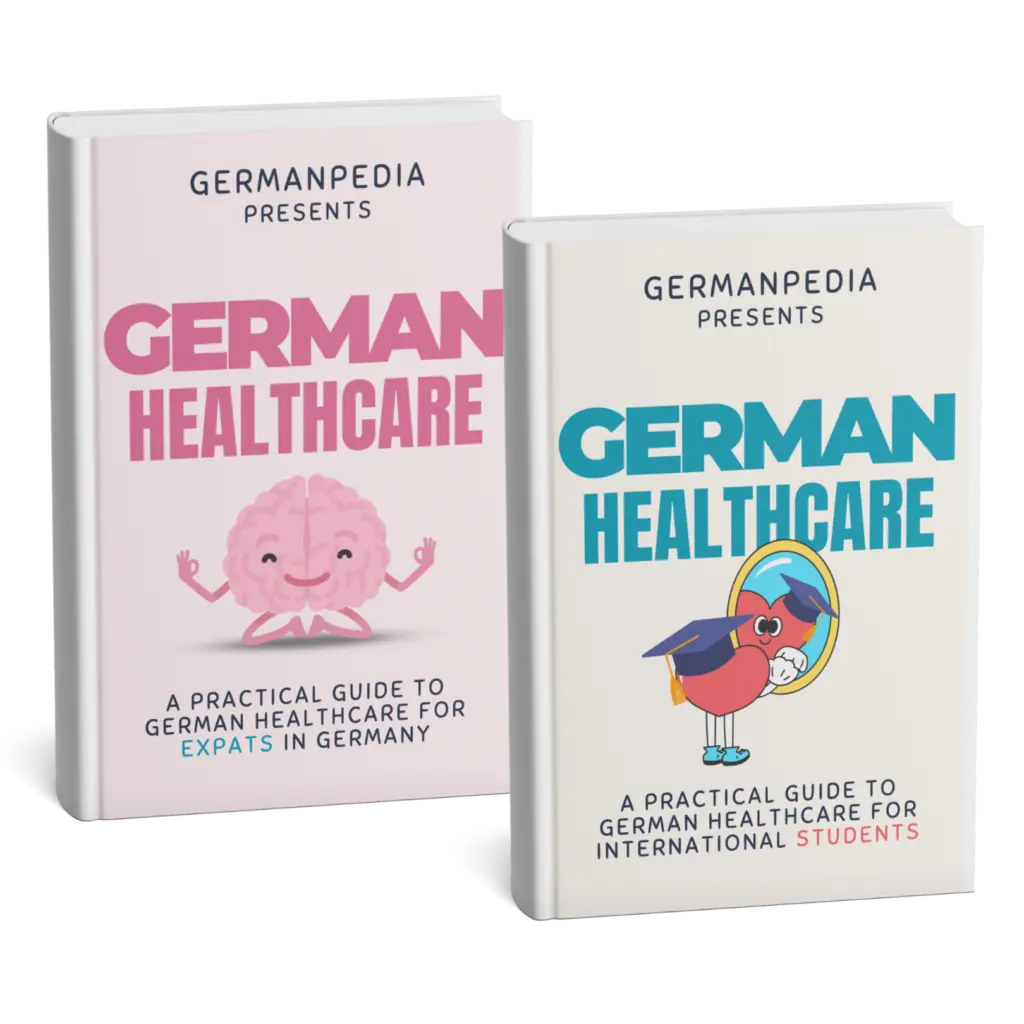
- The German healthcare system is complex. This is why we wrote this book to help you navigate it.
- Choosing health insurance is a life-long decision. If you pick the wrong plan, it may cost you dearly in the future.
- Learn what is covered in public and private health insurance and what is not.
- What supplement health insurance plans must you get based on your personal situation?
When are you obligated to get full health insurance in Germany?
The obligation to have full health insurance applies if
- you have a resident permit valid for more than 12 months AND
- live in Germany.
Usually, if you live more than 50% of the time in Germany, it is considered that you live in Germany. However, it may vary from case to case.
More legally accurate definition
The obligation to full health insurance applies if you have your residence or habitual abode (gewöhnlichen Aufenthalt) in Germany. For non-EU nationals, the condition of having a habitual abode in Germany is met only if they have a residence permit valid for more than twelve months.
You must also live in Germany. No distinction between a habitual and temporary stay has been made in law. Thus, the decision is made on a case-by-case basis. [1]
Private vs public health insurance for students in Germany
| Private health insurance | Public health insurance |
|---|---|
| Private health insurance premium depends on your age, health, and insurance plan. | Students under 30 receive a discounted student health insurance policy, costing around 148€ per month (as of 2026). |
| German law doesn’t regulate private student health insurance premiums. | German law regulates the premiums and services of public health insurance (§ 5 SGB V). |
| Private insurance members pay the medical bills themselves and get reimbursed by the insurance company. | Once accepted into the public health insurance system, you’ll receive a health insurance card. You can use the card to get most medical services in Germany without paying a cent. You may have to pay a small statutory co-payment. |
| Switching private health insurance providers is expensive, as you lose part of your retirement provisions. | You can switch your public health insurance provider, but standard membership notice periods and minimum membership (12 months) rules apply. You also have an extraordinary cancellation right if your insurer raises the additional contributions (Zusatzbeitrag) (§ 175 SGB V) |
| Good private health insurance often offers better services (e.g., single rooms, private specialists, etc.). However, it may exclude pre-existing conditions. | Public health insurance coverage is defined in law. The German government revises the coverage every year. |
Private health insurance is not automatically better than public insurance. You must weigh the pros and cons of both before choosing one.
Moreover, you must consider the long-term view while deciding which type of health insurance to take. For example, are you planning to settle in Germany, or are you here only for studies? Would you like to have a family in the future, etc.?
You can use our “Health Insurance Finder” tool to check which health insurance (Public or Private) makes sense and when. We recommend getting advice from a fee-based advisor or health insurance broker before deciding.
Health insurance finder
Determining which health insurance is right for you can be confusing. So, we created this tool to help you decide.
Answer a few questions, and the tool will tell you which health insurance best suits your current situation.
How do you terminate student health insurance when leaving Germany?
You must send a contract termination request in writing to your health insurance company. You can send the letter via registered post or upload it to the insurer’s website.
You also need to provide proof that you are leaving Germany. The health insurer considers your plane ticket or de-registration certificate (Abmeldebescheinigung) as proof. You cannot cancel your health insurance policy without proof of leaving Germany.
Ask your health insurer for a written termination confirmation with the exact end date and a statement of any remaining premium balance. Settle the outstanding contributions (if any).
Lastly, cancel the SEPA direct debits if you authorized any.
Your health insurance will end at the date of deregistration (Abmeldung) (§ 5 Abs. 1 Nr. 13 SGB V and § 190 Abs. 13 Nr. 2 SGB V)
If you plan to return to Germany later, and
- have private health insurance: Ask your insurer about an Anwartschaftsversicherung to preserve benefits.
- have public health insurance: Ask your insurer about options on re-entry.
Suppose you are moving within the EU/EEA or to a country with a social-security agreement. In that case, different rules on coverage and proof may apply. Check with your insurer before you leave.
Health insurance cancellation letter
Every public health insurance company has its contract cancellation letter that you can use. Here is the form from TK.
You can also use our sample letter to cancel a private health insurance contract.
Sample letter to terminate the health insurance contract
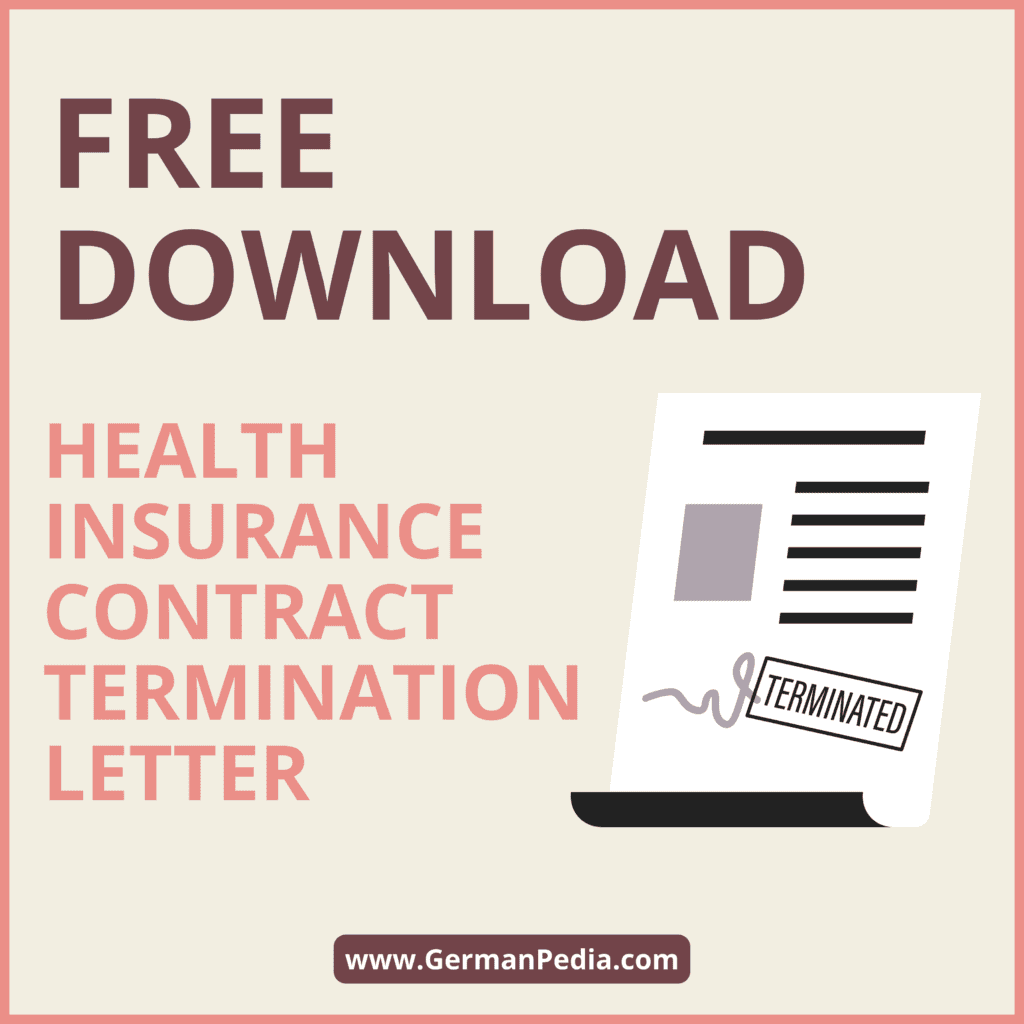
- Download the sample termination letter written in German and English.
- You can use the letter as it is. You only need to fill in your details.
- The letter is available in both docx and pdf formats. Hence making it easy to modify.
Health insurance for students from EU member states
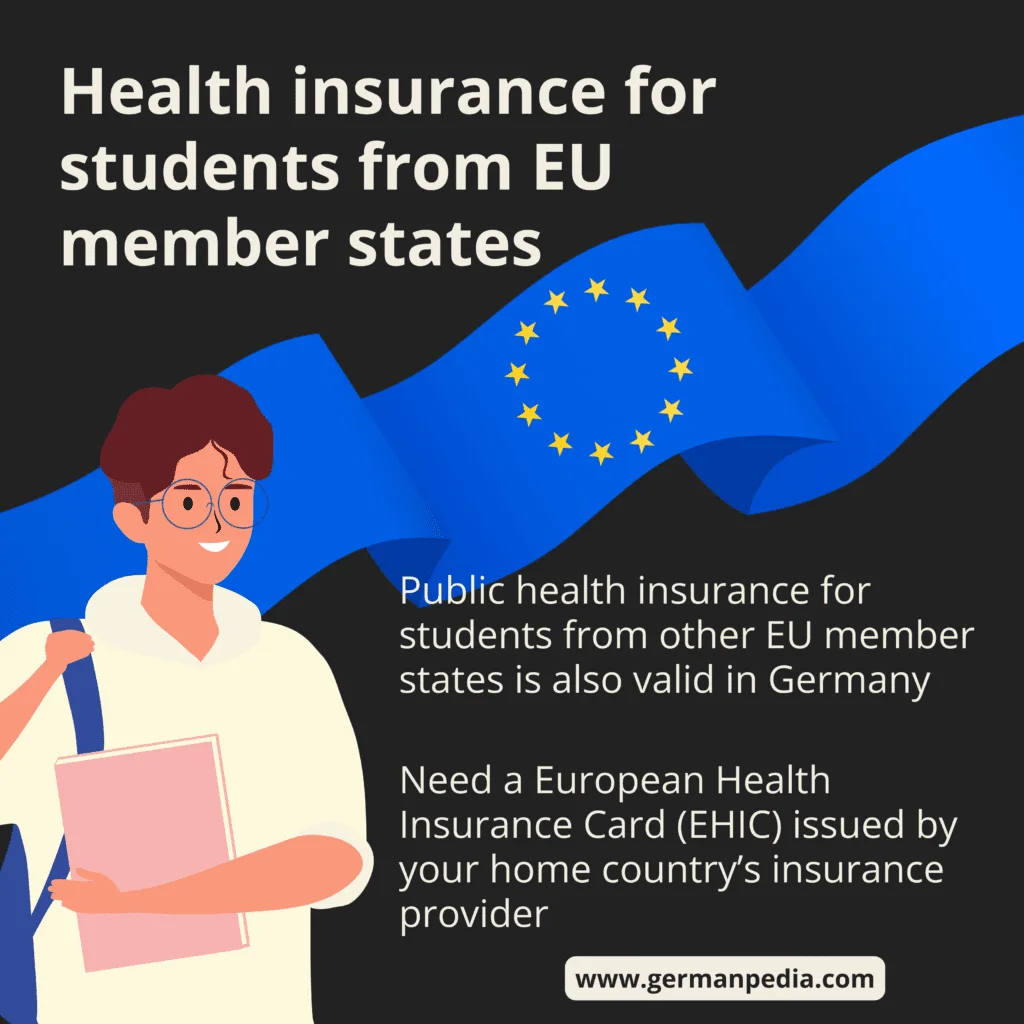
Students who are citizens of an EU / EEA country or Switzerland can use their home-country statutory health insurance while studying in Germany. But you must get your health insurance policy recognized by a statutory health insurer in Germany.
You can present your European Health Insurance Card (EHIC) or a certificate of entitlement (S1) from your home insurer to any German public health insurer. The German insurer will verify the cover and either send the required M10 confirmation directly to the university or issue a certificate you can use for matriculation (§ 8 SGB V)
You can apply for the certificate online via TK here.
You can get an EHIC card from your home country’s health insurance provider.
Even the private health insurers from other EU member states are recognized in Germany. But you cannot switch to a statutory health insurance provider in this case.
Suppose the German public health insurer doesn’t accept your foreign (private or public) health insurance as sufficient for exemption. In that case, you must get valid German health insurance (public or private) before or at matriculation.
Summary
- Contact your home country’s health insurer to get an EHIC or S1 portable document.
- Contact a German public health insurance company for the exemption certificate or M10 notification. Ensure your university received the M10 notification. You can do all these steps online from your home country.
Health insurance for students from the UK
This is how it works for students from the UK.
- Apply for the student Global Health Insurance Card (GHIC) if you don’t have one. You can apply online via the NHS.
- If you have an EHIC, you can use it till it expires. Afterwards, you must apply for GHIC. The GHIC replaces the EHIC for UK residents.
- Contact any German public health insurer for an exemption certificate or M10 notification (sent directly to your university). The German insurer will verify whether your GHIC/EHIC meets the German healthcare requirements. If yes, the German insurer will send an M10 notification to your university directly. You’ll also recieve an exemption certificate.
- You can apply for the exemption certificate online via TK here.
- Your university and foreign office require either an exemption certificate from a German public health insurer or a valid German health insurance policy (§ 199a SGB V). Without one, you cannot enroll in a German university or obtain a resident permit.
You should do all the above steps before coming to Germany.
NOTE: If you work (internship, student job, etc.) while studying, you must join a German health insurer (statutory or private). [2]
Suppose GHIC or EHIC is not accepted for your situation. In this case, you must get German statutory or private student health insurance, depending on your eligibility.
Suppose you have an S1 form or other special coverage from the UK. In this case, contact the German health insurer to clarify if it is enough. The German health insurer handles such cases individually.
Health insurance for students from countries that signed a social security agreement with Germany
The following countries are not part of the EU. However, they have signed a social security agreement with the EU.
- Bosnia and Herzegovina
- North Macedonia
- Montenegro
- Serbia
- Turkey
- Tunisia
Here is the process for the students from the countries mentioned above.
- Obtain an entitlement certificate (“Anspruchsbescheinigung”) from your home country’s social security or health insurance provider before coming to Germany. The exact name of the entitlement certificate varies by country (examples: AT-11, ATN-11, BH6, etc.).
- Present the entitlement certificate to any German statutory health insurer (gesetzliche Krankenkasse). German statutory health insurer verifies the entitlement certificate electronically via the EESSI system (Electronic Exchange of Social Security Information). After verification, the German health insurer will issue the M10 notification and exemption certificate.
- You can apply for the exemption certificate online via TK here.
Suppose you cannot get an entitlement certificate from your home country. In this case, you must get German statutory or private insurance.
Which health insurance can you get based on your course?
Here is an overview of the type of health insurance you can get based on the course you are enrolled in.
| Course | Public health insurance | Private health insurance |
| Preparatory course | ❌ | ✅ |
| Language course | ❌ | ✅ |
| Exchange or Erasmus students | ✅ | ✅ |
| PhD students | ✅ | ✅ |
You can also use our “Health Insurance Finder” tool to check which health insurance (Public or Private) makes sense and when.
Health insurance for preparatory course students in Germany
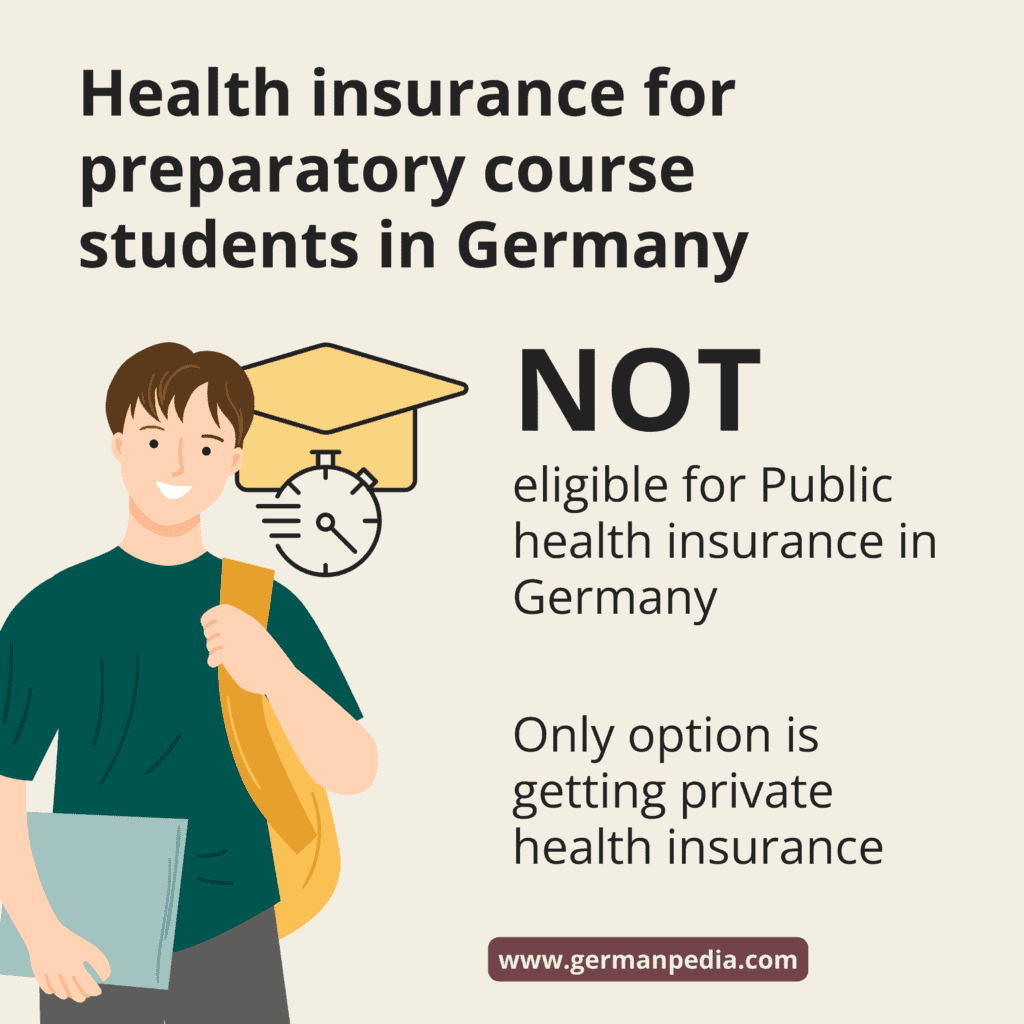
Students coming to Germany to attend preparatory courses (e.g. Studienkolleg or university preparatory programmes) cannot insure themselves with a statutory health insurance company. But German law still requires proof of health insurance.
Thus, the only choice for students in preparatory courses is to get expat health insurance or full private health insurance.
You can check expat health insurance from Feather* or Dr. Walter*. Feather and Dr Walter are insurance agents. Don’t confuse them with insurance companies.
To obtain full private health insurance, work with an insurance broker.
NOTE: Students with a European Health Insurance Card (EHIC) only have to get an exemption certificate. They don’t need a German health insurance policy.
What is a preparatory course in Germany?
Some German universities don’t recognize the schooling certificate from your home country. Thus, the university requires you to attend a preparatory course to assess your skills.
The course is usually two semesters long and ends with an exam. Once you successfully finish the course, you can enroll at your university.
Health insurance for language students in Germany
The German health insurance system treats language students like preparatory students. This means you cannot get student insurance from a statutory health insurance provider in Germany. So, the only choice is expat health insurance or private health insurance.
If you have an EHIC, you only need an exemption certificate from a German health insurer.
Health insurance for exchange students in Germany
Exchange students or Erasmus students can take private or statutory health insurance in Germany. It is because the exchange students are part of a university degree.
Students from another EU / EEA country with a valid EHIC don’t need a German health insurance policy. They only require an exemption certificate from a German health insurer.
Health insurance for PhD students in Germany
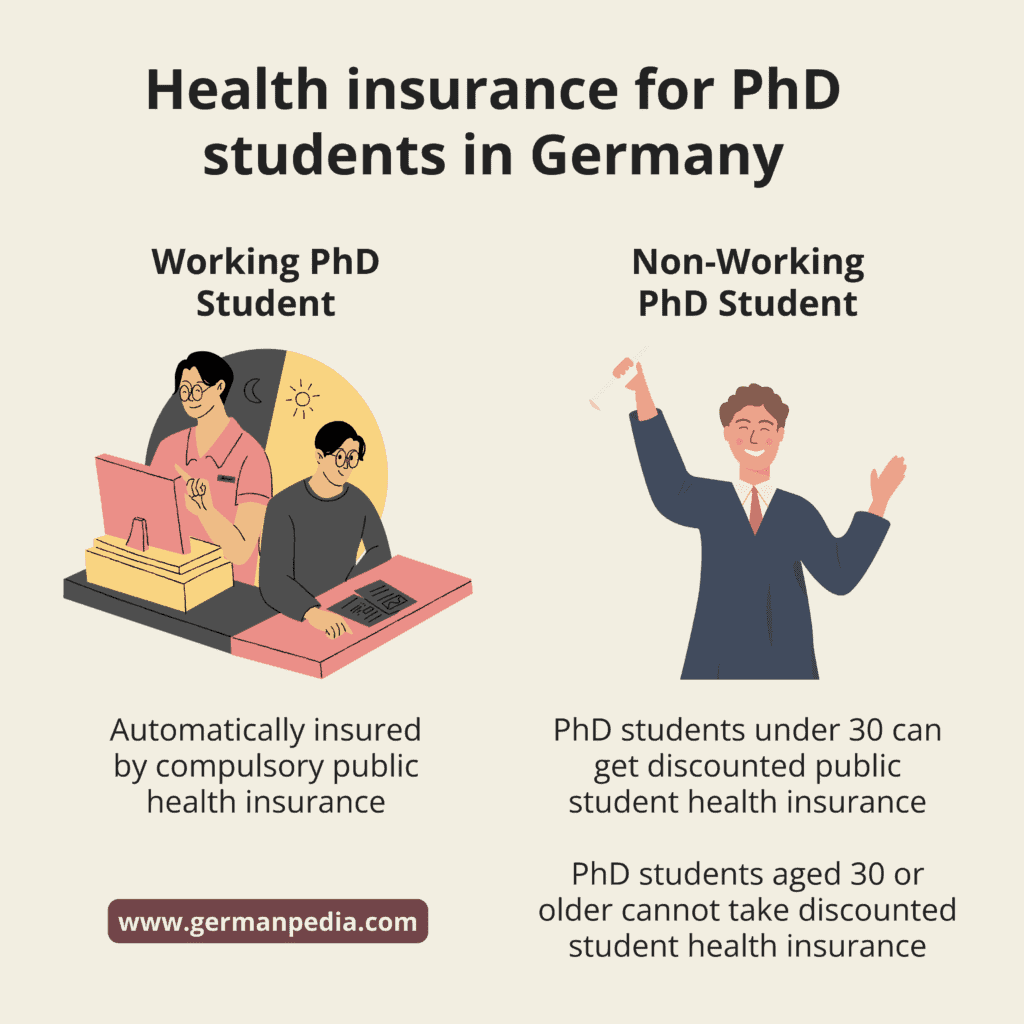
Working PhD students
You are automatically insured by compulsory public health insurance if you work in Germany. Assuming that you earn less than the income threshold, i.e., 77,400€ (as of 2026).
PhD students working in Germany don’t get discounted student health insurance.
Non-working PhD students
- PhD students under 30 can get discounted public student health insurance.
- PhD students aged 30 or older cannot take discounted student health insurance. They can take private or standard public insurance (without a student discount).
Health insurance for DAAD-scholarship holders
Your DAAD scholarship already includes health insurance that is accepted in Germany. Here is what the official website of DAAD says.
The DAAD offers combined health, accident, and personal liability insurance for trainees, students and academics – as well as their partners and children – who come to Germany. DAAD scholarship holders receive this insurance automatically.
Health insurance for international students working part-time
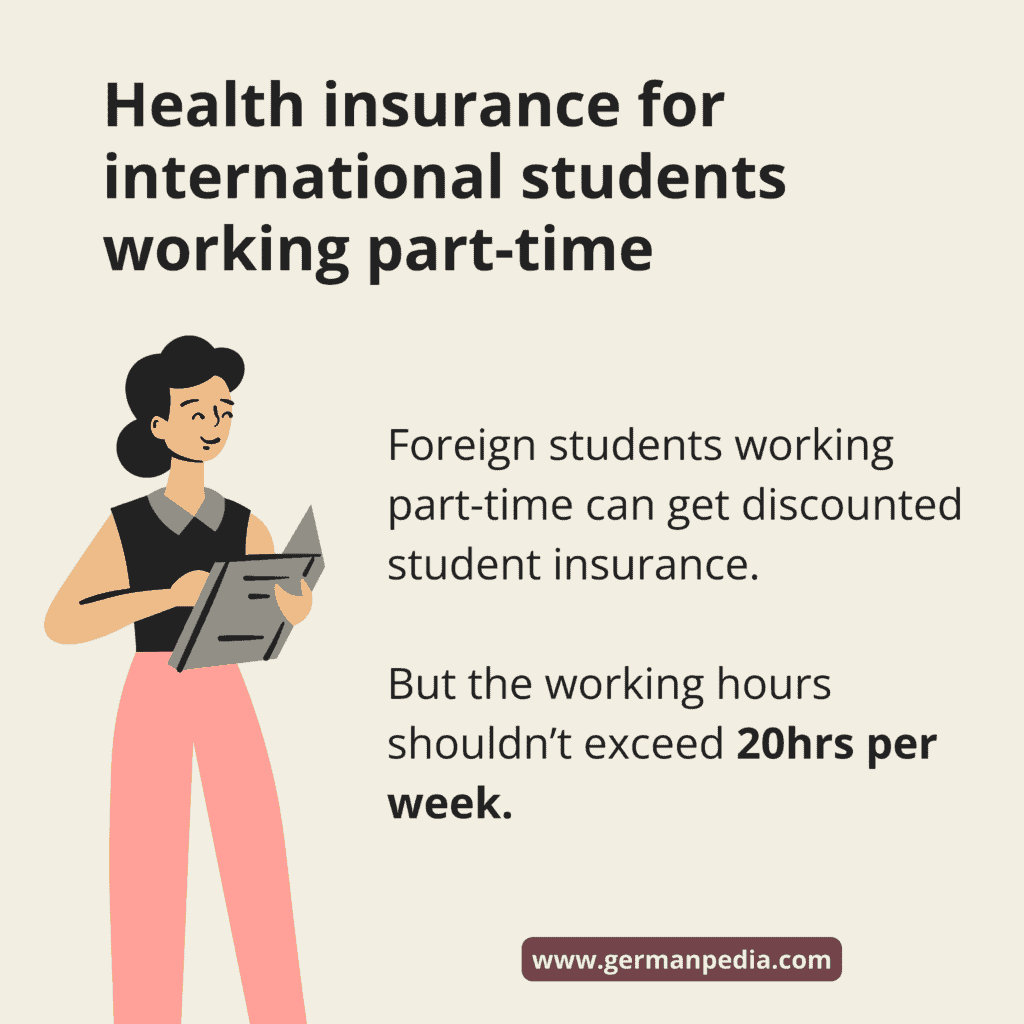
Foreign students under 30 working part-time alongside their studies can still enjoy discounted student insurance. The condition is that the working hours should not exceed 20 hours per week.
If you work more than 20 hours per week, you are no longer eligible for student insurance. In this case, you must inform your health insurance provider.
Exception
During semester breaks, you may work more than 20 hours per week. However, working above 20 hours must be limited to 26 weeks (or 182 calendar days) within a rolling 12‑month period.
Suppose you exceed the 182 calendar days limit. In this case, you lose discounted student health insurance and must pay normal public health insurance premiums.
Discounted student insurance is relevant if you want public health insurance. To private health insurers, it doesn’t matter if you are a student or not. Private health insurance premium depends on your age and health.
Do student loans and child benefits count as income for health insurance purposes?
BAföG (student financial aid) and child benefit are not considered income. You are allowed to earn additional money as a working student and remain covered under your family’s health insurance or student tariff.
However, your BAföG will be reduced once your income exceeds a certain threshold. Since the winter semester of 2025/2026, you are allowed to earn 603 euros per month (as of 2026) without your BAföG being reduced.
Health insurance after the end of your studies
There can be four different scenarios after finishing your studies if you stay in Germany.
- You get a job
- You are unemployed
- You become self-employed
- You become a civil servant
You get a job after finishing your studies
- You had public health insurance during your studies: You’ll continue with the same coverage after you start working. You can switch to private health insurance if you earn above the income threshold (i.e., 77,400€ (as of 2026)) (§ 6 SGB V).
- You had private health insurance during your studies: You can stay in private insurance if you earn above the income threshold, i.e., 77,400€ (as of 2026). Otherwise, you’ll be insured under statutory health insurance.
You become self-employed after your studies
- You had public health insurance during your studies: You can choose between public and private health insurance. You should only pick private healthcare once you consistently start earning a high income. Till then, stick with public health insurance.
- You had private health insurance during your studies: You will stay in private insurance. You cannot change to public health insurance.
- You become a journalist or artist after studies: In this case, you should join the artists’ social insurance fund (KSK).
You became a civil servant after your studies
Private health insurance is the best choice for civil servants (Beamte) in Germany. This is because the state offers Beihilfe (health cost allowance) that covers 50 to 70% of their medical costs.
Thus, civil servants only need to take out private health insurance for the remaining costs. This makes private health insurance premiums for civil servants much cheaper than standard rates.
Always get private health insurance through an insurance broker.
You are unemployed after your studies
Public health insurance during your studies
If you are eligible for the “unemployment benefit I” (Arbeitslosengeld I), apply for it at the employment office (Arbeitsagentur). Otherwise, you should apply for a citizen’s allowance (Bürgergeld).
In both cases, the job center pays your statutory health insurance premium.
Suppose you have only a one-month gap between starting your job and finishing your studies. In this case, you can benefit from the so-called subsequent health insurance.
In subsequent health insurance, you don’t pay for health insurance for one month. The subsequent insurance benefit entitlement ends after one month.
Private health insurance during your studies
In this case, you have the following options.
- You can apply for a citizen’s allowance (Bürgergeld). In this case, the job center pays a subsidy for private health insurance. The subsidy is capped at half the private health insurance “Basistarif” premium. The Basistarif premium is regulated by law and is 1,017.18€ / month (as of 2026) [3].
- You can change your private health insurance plan to save costs. You can also switch to a Basistarif.
- You can switch to statutory health insurance. You can only switch if you receive “unemployment benefits I” due to your previous job (§ 5 SGB V, § 26 SGB II).
Next steps
- Find a rental property in Germany ->
- Register your address in Germany (Anmeldung) ->
- Get personal liability insurance ->
- Understand the dos and don’ts of German culture ->
- Learn about the radio tax in Germany ->
FAQs
Travel health insurance covers you till you get student health insurance in Germany. Travel insurance offers limited coverage.
You need travel insurance when applying for a German travel visa in your home country. Once you are in Germany, you must get German health insurance.
Best travel health insurance in Germany ->
No, healthcare is not free for students in Germany. Students under 30 get discounted public health insurance. But they still pay 148€ per month (as of 2026) as an insurance premium.
Students who are 30 or older don’t get the student discount. They must get standard health insurance (private or public).
Non-EU students: Ask your health insurer for a confirmation letter (Versicherungsbestätigung). You can usually get it in your online member portal. Then upload it to the university during enrolment.
EU students: Go to any German public health insurer and show your EHIC card. The German health insurer will issue an exemption letter and an M10 notification. This serves as proof that you have sufficient health coverage.
No, you cannot pause your German student health insurance during a semester break. The reason is that you are a resident in Germany, and by law, every resident must have health insurance.
German public health insurance or EHIC card: Basic dental treatments, such as checkups, fillings, etc. are covered. Cosmetic treatments are not covered. You can learn more about dental coverage in German public health insurance here.
German private health insurance: It depends on your plan. Good plans offer comprehensive dental cover.
Expat health insurance: It depends on your plan. Usually, it doesn’t cover dental treatments.
No, you cannot pause your health insurance membership (public or private) during semester breaks. The reason is that you are a resident of Germany. As per German law, every resident in Germany must have health insurance.
More topics
- How to save taxes as a student in Germany?
- Best public health insurance for students in Germany
- Best private health insurance as per top rating agencies
- Health insurance finder
- German healthcare explained
- Minimum coverage your private health insurance plan should offer
- Private health insurance costs in Germany
- Private vs public health insurance
- Private health insurance costs in old age
References
- https://www.studierendenwerke.de/themen/studieren-mit-behinderung/finanzierung/krankenversicherung/private-krankenversicherung-sinnvolle-alternative-fuer-studierende-mit-beeintraechtigungen
- https://www.uni-frankfurt.de/120841082/Krankenversicherung_f%C3%BCr_internationale_Studierende
- https://www.finanztip.de/krankenversicherung/krankenversicherung-student/
- https://www.tk.de/en/service-faqs/life-change/leave-germany-permanently-health-insurance-cover-2092300
- https://www.studierendenwerke.de/themen/studienfinanzierung/kosten-des-studiums/versicherungen/studienvoraussetzung-kranken-und-pflegeversicherung
- https://www.verbraucherzentrale.de/wissen/gesundheit-pflege/krankenversicherung/studentische-krankenversicherung-diese-moeglichkeiten-gibt-es-10352
- https://www.bundesregierung.de/breg-de/aktuelles/erhoehung-pflegebeitraege-2319616
- https://www.haufe.de/sozialwesen/versicherungen-beitraege/pflegeversicherungsbeitrag-2019_240_455110.html
![Number of People Insured in Public Health Insurance in Germany [2000-2025]](https://germanpedia.com/wp-content/uploads/2025/03/number-of-people-insured-in-gkv-and-pkv-768x1152.webp)
![Number of People Insured in Public & Private Health Insurance in Germany [2025]](https://germanpedia.com/wp-content/uploads/2025/03/number-of-people-insured-in-gkv-and-breakdown-768x1152.webp)