
Germany’s homeownership rate fell to 43.5% in 2025. That is the lowest level in more than 20 years.
Nearly three-quarters of Germans aged 25 to 45 now rent instead of own.
Germany now ranks second-lowest in the EU for homeownership. Only Switzerland ranks lower.
Here are the main factors driving Germany’s homeownership decline.
#1 Rising Construction Costs Are Pricing Out German Buyers
The Pestel Institute for Housing Market Research tracked Germany’s homeownership decline. It points to a widening gap between construction costs and inflation.
- Since 2000, construction costs have risen 160%.
- General consumer prices rose 64%.
- Interest rates have also risen sharply after COVID, making the construction-cost gap harder to close.
All these factors made building or buying a home in Germany out of reach for many.
Master German Home Buying Process
in 12 Days For FREE
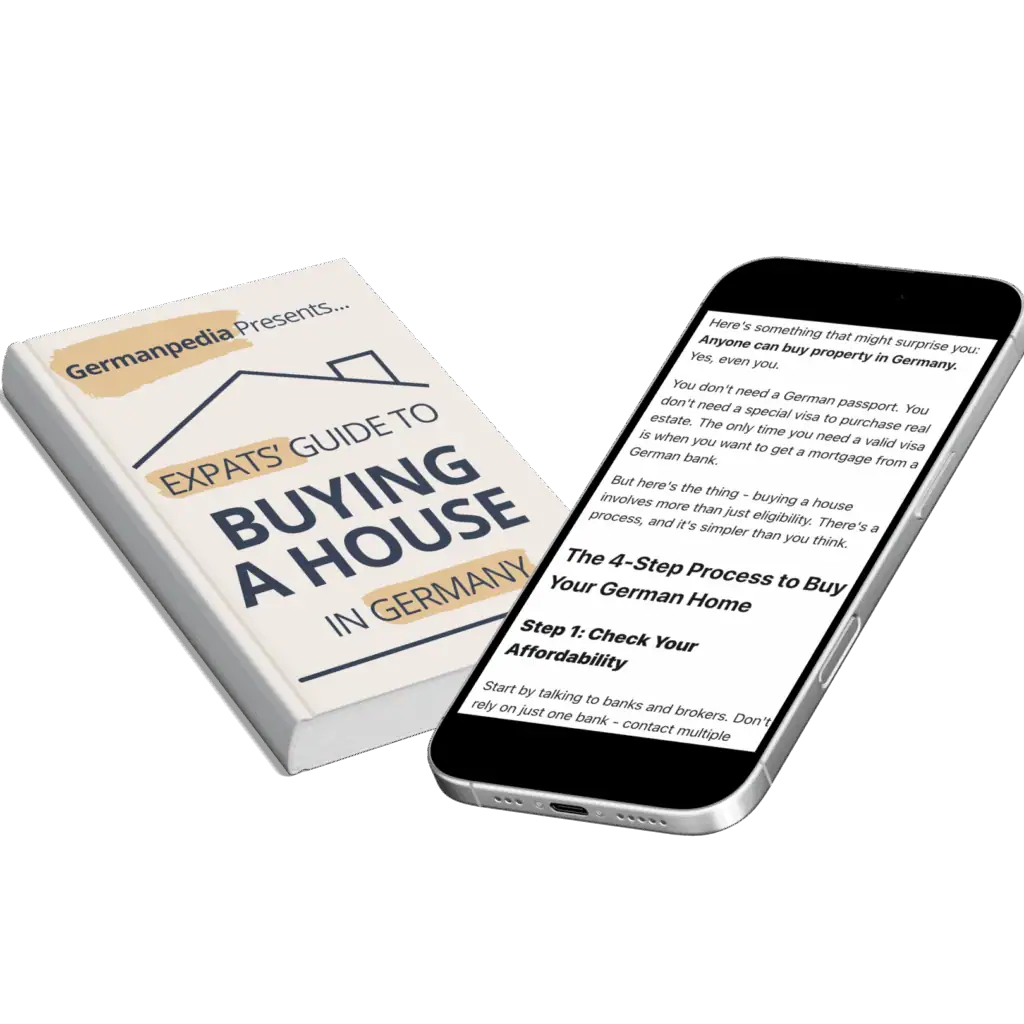
- Learn complete process of buying a house in Germany and how to invest in German real estate.
- Understand mortgage process, property documents and evaluation, and more.
- Expert tips that’ll save you thousands of euros.
- Know average renovation costs in Germany to plan and negotiate better.
#2 Ending Baukindergeld contributed to the homeownership decline
The Pestel Institute blames Germany’s decision to end the child-building subsidy (Baukindergeld) five years ago. It says ending Baukindergeld saved little money and would cost the state more in the long run.
Fewer first-time buyers entered the market after Baukindergeld ended. And at the same time, construction costs kept climbing. Together, they contributed to the homeownership decline in Germany that we are seeing today.
Steps To Take If You’re Considering Buying a House in Germany
Follow these steps if you’re weighing a home purchase in Germany right now:
- Budget for construction costs that have outpaced inflation. Factor this into any renovation or new-build plans.
- Check today’s financing conditions with a Baufinanzierungsberater (mortgage financing advisor). Interest rates are higher than in the 2010s.
- Look into KfW low-interest loan programs for buyers and energy-efficient building. These can offset some upfront costs.
If you cannot afford to buy a house, you can learn tips to find an affordable rental here.
Sources
- Newsworm — Homeownership in Germany Falls to Lowest Level in 20 Years
- Pestel-Institut — “Wohneigentum in Deutschland” (2025 study PDF)
- Pestel-Institut — Wohnungsmarkt (institute’s housing-market page)
- Eurostat — 68% of people living in EU households own their home
- Destatis — Wohnen in Deutschland (housing statistics hub)