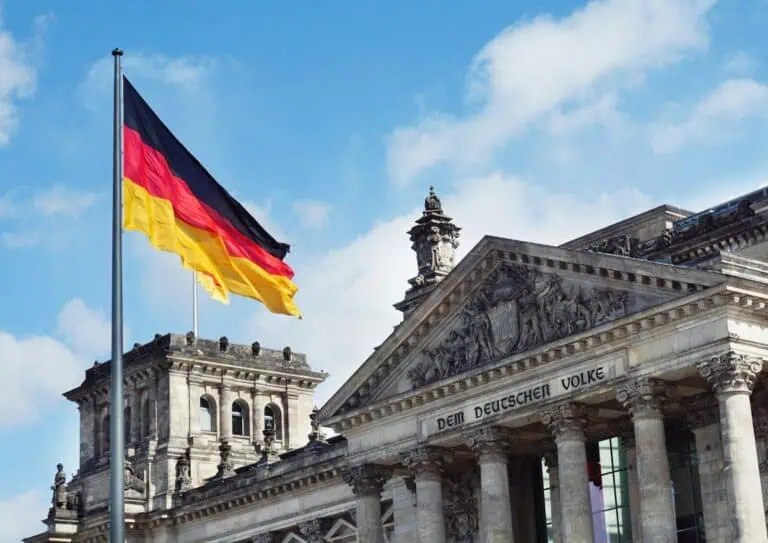
On June 3, 2026, the German Cabinet approved the action program (Aktionsprogramm) for the National Circular Economy Strategy (Nationale Kreislaufwirtschaftsstrategie, or NKWS). The program introduces digital product passports, AI-supported recycling tools, public procurement requirements, and a national platform for industry actors. The government’s stated goal is to reduce Germany’s dependence on raw material imports.
Why Germany Is Strengthening Circular Economy Policy
Germany imports large volumes of raw materials. These are critical for manufacturing, energy technology, and electronics. They include metals, minerals, and rare earths. Several supply chains for these materials run through geopolitically unstable regions or through China.
The program also responds to the EU Circular Economy Action Plan and the incoming EU Ecodesign Regulation. The EU Ecodesign Regulation requires products sold in Europe to meet minimum standards for durability, repairability, and recyclability.
Environment Minister Carsten Schneider (SPD) described the circular economy as a tool for reducing import dependence. He said it protects German companies when supply chains become fragile or trade routes are blocked.
Germany’s Circular Economy Action Program Introduces Four Main Components
The Circular Economy Action Program has four main components.
Digital product passports (digitale Produktpässe) will be introduced for manufactured goods. A product passport is a data record that travels with a product through its entire lifecycle. It records what materials were used, how the product can be repaired, and how components can be recovered for recycling. Product passports make it easier for recyclers and second-hand markets to identify what they are handling.
AI applications for recycling and resource efficiency will be funded. This includes AI-supported sorting systems that can identify and separate materials more accurately than current manual or mechanical systems. This reduces contamination in recycling streams.
Public procurement (öffentliche Beschaffung) will be used as a policy lever. Federal authorities will be required to apply circular criteria when purchasing goods and services. This will favor products that are durable, repairable, or made from recycled content. Germany’s federal public procurement budget runs to billions of euros annually, making this a significant demand signal for industry.
A national platform for all relevant actors will be established to coordinate implementation. These actors include manufacturers, recyclers, logistics companies, research institutes, and public authorities. The platform is intended to break down the current fragmentation between sectors.
The program also commits to developing what it calls “circular industrial data spaces” (zirkuläre industrielle Datenräume). These are secure infrastructures for sharing supply chain data across companies without exposing proprietary information.
What Germany’s Circular Economy Program Changes for Businesses and Consumers
For businesses that manufacture or sell products in Germany, the digital product passport requirement will phase in over time. The EU Ecodesign framework will define which sectors are affected first. Germany will then embed those definitions in national law.
For consumers, the program does not impose new direct obligations. Products will gradually carry more repairability information, longer warranties for spare parts, and clearer labeling on recycled content.
NOTE: The Aktionsprogramm is a cabinet-approved action plan, not a standalone law. Individual measures will require separate legislation or regulation before they have binding legal effect. These include mandatory digital product passports and public procurement criteria. The Bundestag has not yet voted on implementing legislation.