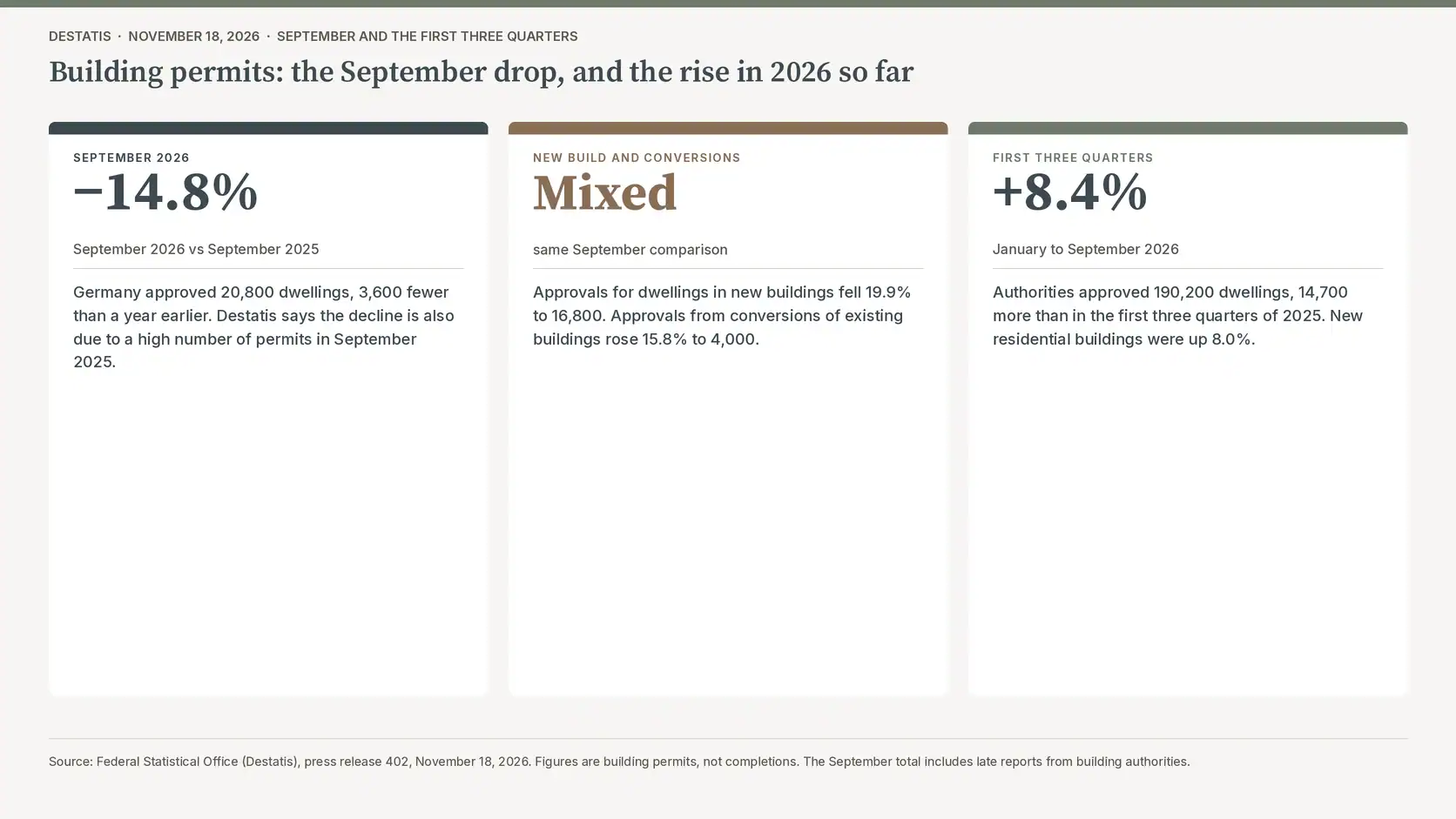
In September 2026, German building authorities approved 20,800 dwellings. That is according to official figures the Federal Statistical Office (Destatis) published on November 18, 2026 in a building-permits press release.
That was 14.8%, or 3,600 dwellings, fewer than in September 2025.
The September change was not the same for every type of work:
- Approvals for dwellings in new buildings fell 19.9%, or 4,200, to 16,800.
- Approvals for dwellings created by converting existing buildings rose 15.8%, or 500, to 4,000.
Building Permits in Germany: Key Takeaways
- In September 2026, Germany approved 20,800 dwellings, 14.8% or 3,600 fewer than in September 2025, Destatis says.
- New-build approvals in that month fell 19.9% to 16,800. Conversion approvals rose 15.8% to 4,000.
- Destatis says the September decline is also due to a high number of permits in September 2025.
- In the first three quarters of 2026, authorities approved 190,200 dwellings in new and existing buildings, 8.4% or 14,700 more than in the same period of 2025.
- Of those, 154,000 were in new residential buildings, up 8.0%. Destatis says the upward trend in new residential buildings continued.
- Approvals for dwellings in halls of residence (Wohnheime) fell 8.0% to 6,200 in the first three quarters.
Why Building Permits in Germany Fell in September
The 14.8% figure is Destatis’s year-on-year change for all approved dwellings in September 2026, in new buildings and in conversions of existing buildings. New-build approvals made up most of that month’s total, and they fell more sharply than the overall figure.
Destatis says the decline is also due to a high number of permits in September 2025. The office does not, in this release, name any other cause for the monthly drop.
A further caveat applies to the monthly series. Building permits often enter the statistics later than the month they were issued, because building authorities send late reports (Nachmeldungen).
Those late reports can change a later month’s published total. Destatis says the September 2026 results include late reports of earlier permits, and that reports which arrived too late will appear in later months.
Building Permits in Germany in the First Three Quarters of 2026
Over a longer stretch, the picture is different. In the first three quarters of 2026, authorities approved 190,200 dwellings in new and existing buildings, 8.4% or 14,700 more than in the first three quarters of 2025.
Destatis says the upward trend in new residential buildings continued. In newly built residential buildings, 154,000 dwellings were approved, 8.0% or 11,400 more than a year earlier.
Approved dwellings in new residential buildings, January to September 2026, compared with the same period of 2025:
- Single-family houses: up 4.8%, or 1,600, to 34,900.
- Two-family houses: up 17.7%, or 1,700, to 11,100.
- Multi-family buildings: up 9.3%, or 8,600, to 101,800.
- Halls of residence (Wohnheime): down 8.0%, or 500, to 6,200.
A further 3,200 dwellings were approved in new non-residential buildings, up 3.1%, or 100. Destatis gives as examples caretaker apartments in school buildings, and apartments above commercial space in city-center locations.
Conversions of existing residential and non-residential buildings accounted for 33,100 approved dwellings in the first three quarters. That was 10.8%, or 3,200, more than in the same period of 2025.
What These Building Permits in Germany Mean for Expats
These figures count official approvals to build or convert dwellings. They are not a count of homes completed, and they are not a survey of rents or asking prices.
A weaker September does not, by itself, change a lease you already have, or the rent on a home you are viewing this month. If you rent, the rules on tenancy agreements are set out in our guide to rental contracts in Germany.
If you are considering buying, permits for new residential buildings were still higher in the first three quarters of 2026 than a year earlier. That longer total does not, on its own, tell you what sale prices will do.
For context on ownership, see our piece on why Germany’s homeownership rate is so low. For prices, see Germany’s home prices by state.
Sources
- Federal Statistical Office (Destatis), press release 402, “Baugenehmigungen für Wohnungen im September 2026: -14,8 % zum Vorjahresmonat,” November 18, 2026: destatis.de. All dwelling counts, percentage changes and the statements about the high number of permits in September 2025, the upward trend in new residential buildings, late reports from building authorities, and the examples of dwellings in new non-residential buildings in this article are taken from that official release.
- Destatis notes that the figures are based on reports of issued building permits held by the statistical offices of the Länder in October, that late reports of earlier permits are included in the current month, and that reports which arrived too late enter later months. Detailed results and longer series: GENESIS tables 31111 and 31131.