Key takeaways
- Registration in Germany is the process of informing the local authorities that you now live at this address.
- Everyone is legally required to register (Anmeldung) their residential address in Germany. You must register your address within two weeks (14 days) of moving to the new address.
- You must register at your local Rathaus if you have moved to Germany from abroad or are a non-EU citizen, or have changed your address within Germany.
- You need the registration certificate (Meldebescheinigung) to open a bank account, apply for a residence permit, get a tax ID, etc.
This is how you do it
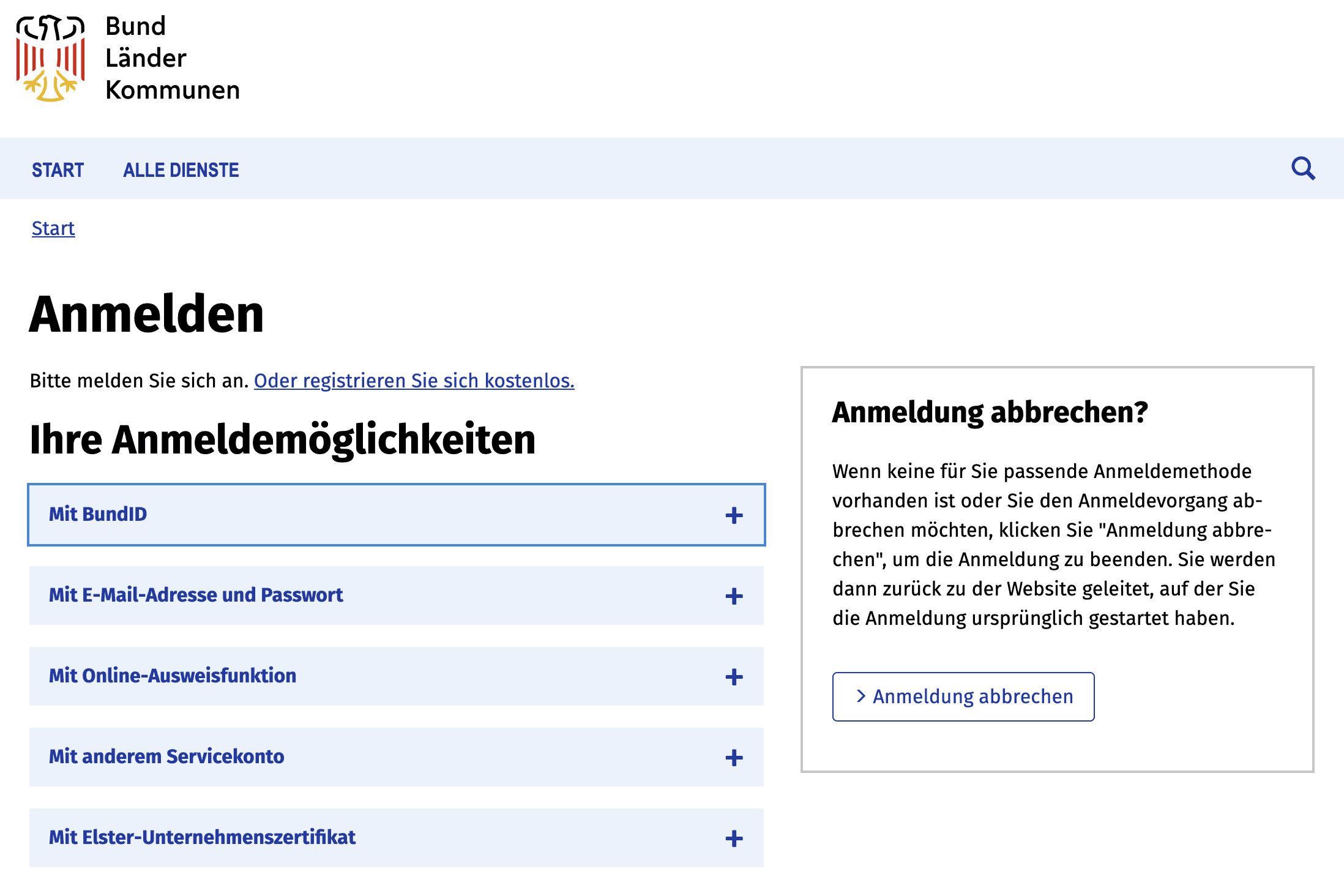
- You can register online at the Bund Länder Kommunen portal.
- You can also register at the municipality registration office (Rathaus or Bürgeramt).
- Before visiting, make an appointment at the local registration office.
- Prepare and bring all your original documents to the appointment.
- Be on time for the appointment. The registration process will be finished within 10 minutes.
The AI overview and answers are as good as the sources it uses.
To ensure you get AI answers from a deeply researched, maintained, and up-to-date source, add GermanPedia to your preferred sources.
What is registration in Germany (Anmeldung)?
Registration in Germany is informing the local authorities that you now live at this address. It’s legally required.
Why must you register in Germany?
- Legally required: Failure to register can result in fines as per § 54 Abs. 2 Nr. 1 BMG.
- Residence Proof (Meldebescheinigung): You get a registration certificate, which acts as official proof of residence in Germany. You need it for various things, such as opening a bank account, health insurance, a tax number, etc.
- Health Insurance: To get a health insurance policy in Germany, you must have a registration certificate (Meldebescheinigung).
- Social Benefits: Registration is required to receive social benefits, such as child benefits (Kindergeld), unemployment benefits, Kita Gutschein, etc.
- Tax Purposes: If you are new to Germany, you will get your tax ID and tax number after you register at the local office (Rathaus, Bürgeramt, Bürgerbüro, or Kundenzentrum).
- Voting Rights: If you are a German citizen, you must have a registration certificate to be eligible to vote in local and federal elections.
- Vehicle Registration: You must register not only yourself but also your vehicle. You need the registration certificate (Meldebescheinigung) to register the vehicle.
- Visa: You need a certificate of registration (Meldebescheinigung) to extend or apply for your residence permit.

What is the deadline for registering in Germany?
You must register your new address within two weeks (14 days) of moving, according to § 17 Abs. 1 BMG. However, finding a rental property is tough in big cities like Berlin, Munich, Stuttgart, etc. And the local authorities also know that.
So, if you haven’t found a place yet, you can inform the local authorities. Usually, they understand and don’t fine you for registering late.
NOTE: The city registration office (Rathaus, Bürgeramt) considers the move-in date on the Wohnungsgeberbestätigung document. It doesn’t matter when you actually moved in.
Who must register in Germany?
You must register in Germany in the following cases:
- Once you move to Germany from your home country.
- If you change your place of residence in Germany,
- You must also register your family members if they moved with you.
- Suppose you and your partner don’t live in the same household, and your minor child changes residence from one legal guardian to another. In this case, you must register your minor child at the new residence. You must provide a declaration of consent signed by both legal guardians. You can download the sample form here.
Who is not required to register in Germany?
You don’t have to register in Germany in the following situations (§ 27 Abs. 2 BMG)
- You are staying in Germany for up to three months.
- Registration is optional if you are already registered in Germany and moving somewhere within Germany for less than six months.
How to register in Germany?
You have two options to register in Germany.
- Register online at the city’s website or the Bund Länder Kommunen portal. Soon, all municipalities will redirect you to the “Bund Länder Kommunen” portal.
- Register at the local citizens’ office (Rathaus or Bürgeramt)
How to register at the local citizens’ office (Rathaus or Bürgeramt)?
Here are the steps to register at the local citizens’ office.
- Find the local authority responsible for your area. You can find it here.
- Get an appointment at your local citizens’ office (Rathaus or Bürgeramt). You can book an appointment online, by email, or by phone. It depends on your municipality. In some cities, you don’t need an appointment and can go directly during the opening hours.
- Prepare the documents. You can find the complete list of documents required for registering in Germany here.
- Go to the local office at your appointment. Your case officer will check your documents and register you.
- Get the registration certificate. Registration in Germany is very quick. You’ll be done within 10 minutes. After registration, the officer will give you your registration certificate (Meldebescheinigung).
You must register in person at the local citizens’ office in the following situations.
- Your city is not listed here.
- You are not a German or EU citizen.
- You are registering (Anmeldung) for the first time.
Someone else can also register you at the Rathaus. However, you must give them a written authorization (Vollmacht) to do so.
NOTE: You can register your whole family in the same appointment.
How to register in Germany online?
- Create an account on the Bund Länder Kommunen portal.
If you already have an account, log in to the portal.

- Update your address
Update your address in the residents’ register (Melderegister). Once confirming the address, the registration authority will send you an email containing your digital registration certificate (Meldebescheinigung).
- Transfer the changed information to your personal ID card chip.
Transfer the changed address from the residents’ register (Melderegister) to your Personal ID card chip (Personalausweis). You can do it by using the Federal ID app (AusweisApp).
- Get the updated address sticker for your personal ID card:
Finally, the authorities will send a new address sticker to affix to your personal ID card (Personalausweis).

You must register online in the following situations.
- Your city is listed here.
- You are a German or EU citizen.
- You are not registering (Anmeldung) for the first time.
For online registration, you’ll need the following:
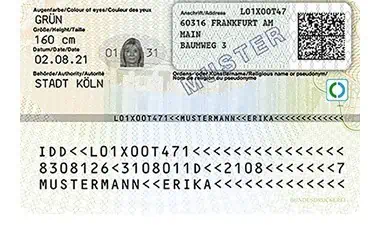
- Personal ID card with Online-Ausweis function and corresponding PIN. You can check if your personal ID (Personalausweis) has an Online-Ausweis function by checking the following symbol on your card.

- Smartphone with an NFC interface or a card reader
- Federal ID app (AusweisApp) (if you don’t have the app, you can download it from here.)
- A BundID account (if you don’t have the account, you can register for it here)
Documents required for registration in Germany
- Residence permit (Aufenthaltstitel) and a valid passport if you are a non-EU citizen.
- A passport is sufficient if you are a German citizen or an EU citizen.
- Identification documents of every family member moving in are required.
- Registration form: Each city has its own registration form. Some don’t require it if you register on-site. You can download it from their website. Here are the forms of the major German cities: Berlin, Munich, Frankfurt, Hamburg, Cologne, and Stuttgart.
- Declaration of consent: Minors who move in with only one parent must have the consent of the other parent. You can download the “Declaration of Consent of the legal guardian” here.
- Wohnungsgeberbestätigung: This is the certificate from the landlord confirming that you have moved into the rental property and the date of your move-in. You can create or download this certificate here. Your landlord must sign the certificate. Presenting the rental contract is not enough.
- Land register extract: If you move into your own home instead of a rental property, you need a land register extract (Grundbuchauszug), a notary contract, or a current property tax assessment (Grundsteuerbescheid).
- Marriage certificate: If you are moving from abroad and are married.
- Divorce certificate if you are divorced
- Death certificate of your spouse if you are a widow.
- Birth certificates of your minor children who are also moving with you.
NOTE: You must translate the documents to German if they are not in English or German. The translation must be done by a publicly appointed or sworn translator.
You must bring the original documents and their translations to the appointment. Arrive at the local office at least 10 minutes before your scheduled appointment. Germans are very punctual and don’t appreciate impunctuality.
How much does registration in Germany cost?
Registering your address in Germany is free of charge.
What happens after you register in Germany?
After registering, you will receive a registration certificate (Meldebescheinigung) via email (online registration) or a printed copy (in-person registration). You can use this certificate to
- Open a bank account,
- Apply for a residence permit,
- Health insurance, or any other purpose.
If this is your first registration, you’ll get a tax ID by post within 4 to 6 weeks from the Federal Central Tax Office (Bundeszentralamt für Steuern (BZSt)).
What happens if you don’t register in Germany?
If you don’t register within two weeks of moving to a new address, you can be fined as per § 54 Abs. 2 Nr. 1 BMG.
How much fine you pay depends on
- How long you delayed the registration and
- Whether it’s your first offense.
The fine could be between €10 and €1000.
The biggest problem expats face when registering in Germany
The only problem expats face when registering in Germany is the lack of the Wohnungsgeberbestätigung document.
It’s tough to find a rental property in Germany. Many expats end up in temporary accommodations. The landlords of these accommodations don’t always provide the Wohnungsgeberbestätigung document.
Unfortunately, you can’t do much about it.
The only option you have is to book a short-term rental. You can find one on one of the portals:
- Homelike*
- Housing Anywhere
- Wunderflats
- Spotahome
- Nestpick
These are fully furnished apartments. However, they are a bit on the expensive side.
You can rent a short-term rental for a few months to register in Germany, obtain all the necessary documents, and search for a permanent rental property.
Things you must do after changing the address in Germany
- Change your address everywhere: bank account, internet contracts, insurance contracts, etc.
- Fill out the relocation form (Umzugsmitteilung) at Deutsche Post. It’s a free service. This way, your posts from banks, insurance partners, and other relevant sources will reach the correct address.
- You can also opt for Deutsche Post’s post-forwarding service (Nachsendeauftrag). The Umzugsmitteilung service covers a wide range of providers, but not all. By signing up for a post forwarding service, you ensure that all the posts addressed to your old address will be automatically forwarded to your new address. If you are expecting any important documents, this service can save you a significant amount of time and effort. It’s a paid service.
- Find a new family doctor (Hausartz), dentist (Zahnartz), Gynaecologist (Frauartz), and pediatrician (Kinderartz), and register yourself as the new patient.
FAQs
Deregistration in the old city happens automatically once you are registered in the new city. You must deregister yourself if you are permanently moving out of Germany.
If your name is not on the post box, you must add ‘care of’ or C/O to your address on your registration form.
Once you register at the local office, you automatically receive your tax ID and health insurance card. The tax office and the health insurance company send the documents to the address mentioned in the registration form.
You won’t receive the letters if your name is not on the post box. Here is an example:
[Your name]
C/O [Name of the person on the letterbox]
[Your street name and number]
[Pincode] [City]
No, you cannot do the registration (Anmeldung) before your move-in date.
The registration office (Rathaus, Bürgeramt) considers the move-in date on the Wohnungsgeberbestätigung document. It doesn’t matter when you actually moved in.
If you are a member of the Catholic, Protestant, or Jewish church, you pay church tax in Germany. Church tax is 8% of your income tax to be paid (not income) in Bavaria and Baden-Württemberg. It’s 9% in all other federal states.
The registration form asks about your religion to determine if you are a member of the church. If you are, the registration office will communicate this to the local tax office (Finanzamt).
Most German banks require a registration certificate to open a bank account. However, banks like N26 and Revolut don’t.
Yes, if you change your address within Germany, someone else can register you on your behalf. However, it costs money.
If you moved to Germany from abroad, you must register in person at the local office. However, in this case, you can hire a person to do the registration on your behalf in some cities.
You must provide this person with your original documents and power of attorney (Vollmacht).
Yes, you can register on your own even if you don’t speak German. Most local authority officers speak and understand basic English.
Even if they don’t, you have the following options:
– Use Google Translate to communicate during the appointment.
– Hire a translator to accompany you to the appointment (it costs money).
– Take a friend with you who can translate for you.
Moreover, registration is a straightforward process. And the officer usually doesn’t ask many questions.
Yes, Germany has rolled out an online registration portal for all residents to register their address online. It is called Electronic Residence Registration (Elektronische Wohnsitzanmeldung).
The portal makes it easier for residents to register, change, and modify their addresses. You can check if online registration is available for your city here.
If you move to Berlin, you can register your residence in two ways: through an online portal or at the respective municipal office. You can schedule your appointment at the respective office here.
If you move to Munich, you can register your residence in two ways: through an online portal or at the respective municipal office. You can schedule your appointment here.
If you move to Frankfurt, you can register your residence in two ways: through an online portal or at the respective municipal office. However, if you are planning to register offline, you must book an appointment here or by phone (069/115).
If you move to Stuttgart, you can register your residence in two ways: through an online portal or at the respective municipal office. You can schedule your appointment here.
If you move to Hamburg, you can register your residence in two ways: through an online portal or at the respective municipal office. Book an appointment here before visiting the office.