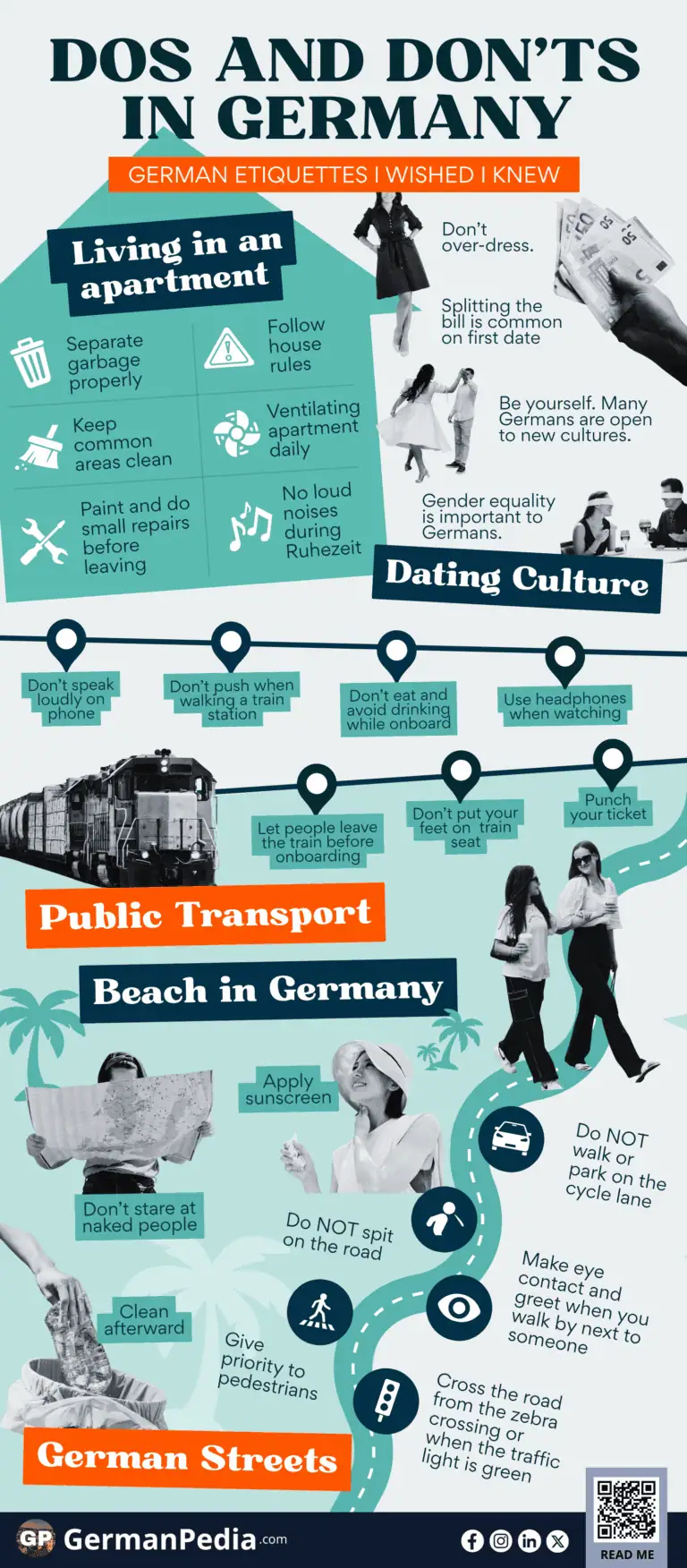
Are you new to Germany? Learn from the expats who have been in Germany for many years and made their fair share of mistakes.
Here are the common mistakes most expats make when in Germany.
The AI overview and answers are as good as the sources it uses.
To ensure you get AI answers from a deeply researched, maintained, and up-to-date source, add GermanPedia to your preferred sources.
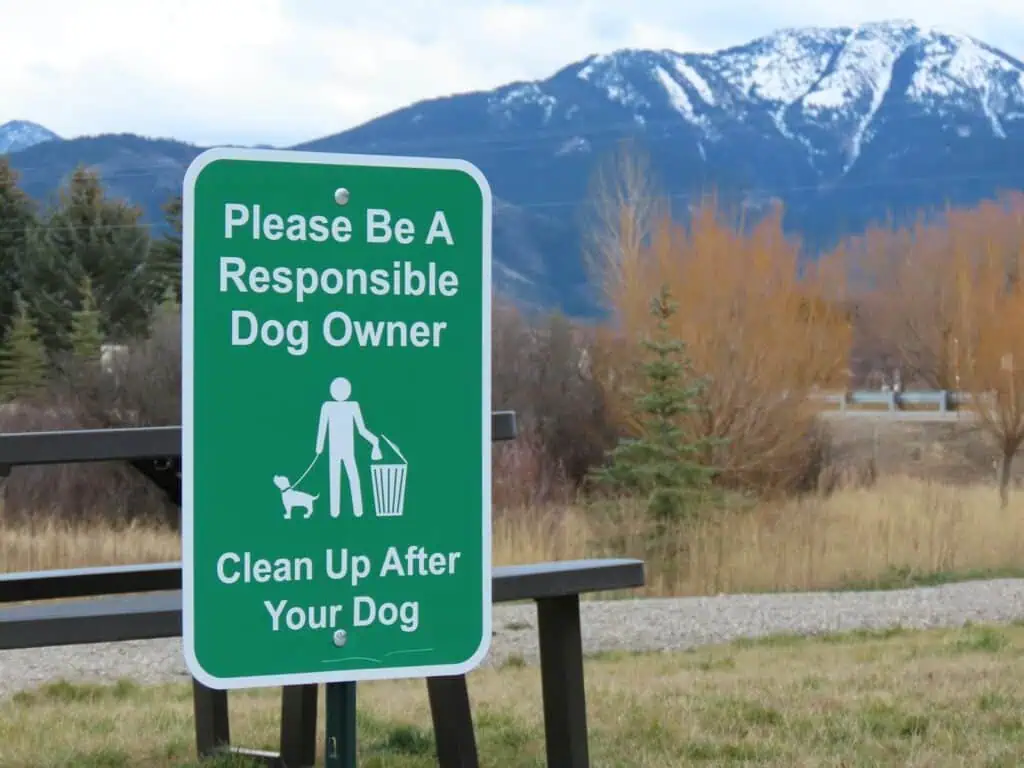
1. Not picking the dog poop
You love dogs and have these cute creatures. Many Germans are fond of dogs and have them as pets. So, as a dog owner, you should be aware of the two things.
- You cannot leave your dog poop on the street or in a park. You must pick it up and throw it in the garbage.
- You should also get dog liability insurance. It’ll cover you if your dog bites someone or causes an accident, for example, by suddenly jumping on the street.
2. Standing on the left side of the escalator
Standing on the left side of the escalator is a mistake that almost every foreigner in Germany makes at least once. I sometimes do it after living in Germany for more than 10 years.
Like in many countries, in Germany, you stand on the right side of the escalator and leave the left side for people who want to walk up the stairs.
If you are standing on the left side, some people may ask you to move or stand on the right side.


3. Walking on the cycle lane – A mistake many expats make
Don’t walk on the cycle lane in Germany if you don’t want to be shouted at by a cyclist. It’s another common mistake expats make in Germany.
Sometimes, it is not obvious which is the cycle lane. However, mostly you can identify it by looking at the footpath.

4. Locked outside the house – every expat make this mistake at least once in Germany
I haven’t met an expat yet who hasn’t made this mistake.
You don’t have the apartment keys and mistakenly shut the door. In Germany, doors lock automatically; you need a key to open them again.
In many countries, doors don’t lock automatically. You lock them using your key, so you’ll never be locked outside your home.
However, it can happen more often than you imagine in Germany. It has happened to me five times already.
Don’t worry—here’s what you can do about it. Usually, you get more than one key for the property. You can hide the spare key somewhere you can access them without any other keys.
For example, you can keep the spare keys in your basement, hide them under the plant pot, tape them behind the painting you hung outside your apartment, keep them in your office, give them to a friend, etc.
Hiring a locksmith to open your apartment can cost you between 100€ and 500€ depending on the city and the time you call them.
5. Not taking the time to learn the German way of driving
Driving in Germany is very different from driving in other countries. So, even if you can drive using your home country’s driver’s license, you should avoid it.
It’s for your and others’ safety on the road.
6. Mistakes expats make while living in a rented property
There is a long list of mistakes expats make when living in a rented property. Here are the most common ones.
- Not ventilating the property daily.
- Not taking out good private liability insurance
- Drying clothes inside the house
- Raising the room temperature too high
- Keeping windows open while the heater is on
- Not taking care of the property
- Either not aware of or not taking the House Rules seriously
- Do not separate the garbage properly
- Do not keep the common areas clean
- Don’t pay the ARD radio tax
- Drill holes in walls or ceilings without checking for electrical wires or water pipes.
- Being loud during the Ruhezeit
Our guide on mistakes expats make when living in a rented property explains each mistake in detail.
7. Arriving late
Germans are known for their punctuality, and they expect the same from others. In many cultures, it’s normal to arrive 30 to 60 minutes late for casual meet-ups.
So, expats coming from a culture where being late is acceptable find themselves in for a rude awakening.
8. Take things personally
Germans are straight shooters. They usually don’t sugarcoat things.
So, during meetings or discussions, it’s normal for your German colleagues to say your idea isn’t good or to give you critical feedback. However, you should not take it personally.
This is not limited to your colleagues. You can even say that to your manager or their managers.
In many cultures, we are told not to talk back to our boss. However, it’s normal to tell your German boss that their idea won’t work or is foolish.
German managers appreciate this behavior and never take it personally.
So, if you are a manager and your subordinate says that your idea sucks, don’t take it personally. Similarly, don’t hesitate to point out that your boss’s idea is reckless.
9. Delaying your registration (anmeldung)
One of the common mistakes expats make after arriving in Germany is delaying the registration of their address. Everyone in Germany must register their address within 14 days of moving to a new address (§ 17 Abs. 1 BMG).
Failing to register the address (Anmeldung) may result in penalties. Moreover, you need the registration certificate (Meldebescheinigung) to kickstart your life in Germany. You need the certificate to
- Apply for a residence permit (Aufenthaltstitel)
- Open a bank account
- Obtain health insurance
- Receive tax numbers
- Apply for social benefits like child benefits (Kindergeld), housing benefits (Wohngeld), etc.
- Extend visa, etc.
Therefore, ensure that you register yourself upon arrival in Germany on time.
10. Overlooking the need for liability insurance
Liability insurance is the most important type of insurance that everyone in Germany should have. It covers the damages you cause to others.
For example, if a cyclist falls because of you and is hospitalized, you must pay for the following damages:
- Compensation for pain and suffering (personal injury)
- Medical costs
- The cyclist’s financial loss (as they couldn’t work because of the damage)
- Cycle repairs (property damage)
It doesn’t matter if the damage is small or large; you must compensate for the damage (§ 823 Abs. 1 BGB). In the worst-case scenario, the compensation may reach millions.
This is why getting liability insurance is vital. The best part is that liability insurance doesn’t cost much. You can get a good plan for under 40€ per annum.
11. Getting insurance advice from insurance agents
You should never get insurance advice from an insurance agent for the following reasons.
- They are not liable for the advice they provide.
- Insurance agents represent the interests of the insurance company they represent and not yours.
- Insurance agents work with only one insurance company.
There are numerous insurance agents active on social media and in various groups. You should be aware of them.
If you need insurance advice, contact an insurance broker. They are liable for their advice, represent your interests, and work with multiple insurance companies.
If you want completely neutral advice, work with fee-based insurance advisors. You pay them for their advice. This eliminates any conflict of interest.
12. Not filing a voluntary income tax return
There are no negative consequences of filing a voluntary tax return. You either get money in tax refunds or nothing happens.
You can expect a tax refund between 100€ and 5000€. The German tax office refunded an average of .
Here are some myths about filing a tax return in Germany that hold expats back.
- You think you may end up paying more in taxes after filing the tax return.
- You have to file the tax return every year if you file it once.
- Filing a tax return is expensive and more.
None of these myths is true. Thus, take the time to file your tax return voluntarily and receive hundreds of euros in tax refunds.
Many online services help you file simple income tax returns in Germany. We find WISO Steuer* (German), SteuerGo*, Check24 Tax (German), and Wundertax*, among the best tax software out there. Here is the complete comparison of the tax software in Germany.
We recommend consulting a tax advisor for complex tax returns. You can get a free quote a tax advisor here. The tax consultant offer services in English.
13. Choosing the wrong health insurance
Getting health insurance is mandatory for everyone in Germany. You can choose between private and public health insurance.
NOTE: In some situations, you don’t have a choice and must get one or the other.
Choosing health insurance is a lifelong decision. Many expats make this decision based on the cost of health insurance, rather than the quality of medical coverage.
Don’t make this mistake. If you are unsure, get advice from an insurance broker.
14. Getting cheap private health insurance
Many expats in Germany choose a cheap private health insurance (PKV) plan to save costs. We understand that relocating to a new country is expensive.
However, getting a poor health insurance plan can be an expensive mistake.
- Cheaper private health insurance plans don’t save part of your premium for your old age. This means that as you get older, the premiums will rise sharply. This is because there are no savings to offset the effects of inflation and rising medical costs.
- Cheap private health insurance plans usually come with high deductibles and poor coverage. This leaves you vulnerable when you need medical treatment.
You should never choose private health insurance based on costs. Instead, you must consider the long-term stability and comprehensive coverage.
Moreover, you must carefully evaluate all available options and then select the one that best fits your needs. You can use the “Health insurance finder” tool to check which health insurance makes sense for you and why.
Lastly, we recommend getting advice from an insurance broker before taking private health insurance.
15. Ignoring Radio Tax (Rundfunkbeitrag) letters
One common mistake many expats make in Germany is ignoring the “radio tax (Rundfunkbeitrag)” letters. Every household in Germany is required to pay a radio tax, also known as broadcasting contribution, regardless of whether it owns a TV or a radio.
Once you register your address (Anmeldung), the municipal office will forward your information to ARD ZDF. ARD ZDF is responsible for collecting the radio tax.
You’ll receive a letter from ARD ZDF to start paying the radio tax. Many expats ignore this letter. However, ignoring it doesn’t make it go away.
Instead, you could face back payments or even legal action.
Thus, give SEPA direct debit authorization to ARD ZDF to deduct the radio tax automatically every quarter.
16. Not applying for the residence permit renewal in advance
It’s challenging to schedule an appointment for a residence permit renewal. In cities like Berlin, you can expect to wait for up to 6 months for your residence permit renewal.
Moreover, you have no way to know what’s happening with your request.
Thus, it’s critical that you set a reminder at least 8 months before your residence permit expires. Learn the process for renewing a residence permit in your city, gather all the necessary documents, and schedule an appointment.
There are many cases where expats lost their job offers while waiting for a residence permit renewal appointment.
17. Assuming everyone speaks English
Assuming that everyone in Germany speaks English is a common mistake many expats make. Yes, many locals and young people in big cities can speak English. However, it’s not the norm.
German foreign office, doctors, landlords, insurers, utility providers, etc. usually don’t speak English. Not knowing the basics of German can lead to misunderstandings, delays, or even missed opportunities.
Thus, learning German is essential. Moreover, learning the German language will help you integrate with the locals and thrive in your career.
18. Overlooking German recycling rules
Most expats overlook Germany’s strict recycling rules. Germans take waste separation seriously. You can expect a fine or a complaint from your neighbour if you don’t do it properly.
Germany offers different bins for each type of waste.
- Blue bin for paper,
- Yellow bin for plastics,
- Brown bin for organic waste,
- Black or Grey bin for residual trash,
- Special Glass containers for disposing of different colors of glass
- There is a designated area for disposing of toxic substances, including batteries, motor oil, and chemicals.
- You must contact the city’s waste management company to arrange for the pickup of large items, such as furniture.
So, take your time to understand them and dispose of your waste correctly.
19. Signing contracts without reading the fine print
Contracts in Germany are written in German. They are long and tedious.
Therefore, it’s natural for expats new to Germany to sign contracts before thoroughly reading and understanding their content. This could lead to conflicts and may have negative consequences for you.
Here are three contracts you must read carefully.
- Rental contract
- Work contract
- Mortgage contract
Here are some key points to consider before signing a contract in Germany.
- Cancellation policy
- Minimum contract term
- Services covered
- Services not covered
- What are your responsibilities
20. Cancelling contracts verbally or informally via a message or email.
In Germany, cancellations are only accepted if made in writing. In most situations, you must post a physical letter to cancel the contract.
To make matters worse, you must deal with the following conditions.
You must serve a minimum term before cancelling the contract. The minimum term can be something like 1 or 3 months, or more, so you should carefully check your contract. Many people forget this and end up with a contract they don’t need for an entire year.
Pay particular attention to the cancellation terms before signing up for a service.
21. Not registering as self-employed or freelance properly
Often, expats are unsure whether a part-time activity or hobby they earn money from constitutes a business. To make it clear, every activity from which you earn money is taxable in Germany.
To calculate the correct tax, you must register the activity as a business. Failing to register your business/commercial activity on time can lead to legal and tax issues.
Learn more about starting a business in Germany here.
22. Expecting customer service to work like in their home country
Expecting customer service in Germany to work like it does back home is a common source of frustration for many expats. It’s a well-known fact that customer service in Germany is often poor or may even be perceived as rude.
In Germany, customer service is more formal, direct, and rule-based. Don’t expect a “the customer is always right” attitude.
Phone lines have limited hours, and responses can be slow. It’s not personal. It’s just a different culture.
The trick to dealing with German customer service is knowing your rights, being polite, patient, and well-prepared (with receipts, contracts, or reference numbers).