Germany is known for its reliable infrastructure, but power outages (Stromausfall) can still happen. German homes are built to retain heat, but without heating, temperatures can drop to uncomfortable levels quickly.
Hence, knowing how to stay warm in a power outage is essential.
How can power outages happen in Germany?
- Severe Weather: Storms, heavy snow, and flooding can damage power lines and substations.
- Technical Faults: Local construction work or equipment failure can cause localized blackouts.
- Grid Instability: As Germany transitions to renewable energy, fluctuations in supply and demand can occasionally strain the grid, though widespread blackouts are rare.
- Maintenance: Planned outages for maintenance are usually announced in advance, but unexpected extensions can occur.
- Arson: Extremists can also damage power supply lines, resulting in power outages. One such incident happened in Berlin on 4th January 2026.
Immediate steps to retain heat
When the power goes out, your first priority should be to trap the existing heat inside your home.
- Close All Doors: Shut the doors to unused rooms immediately. Focus on keeping one central room warm, usually the living room or kitchen.
- Seal Drafts: Use towels, blankets, or dedicated draft stoppers (Zugluftstopper) at the bottom of doors and on windowsills to prevent cold air from entering and warm air from escaping.
- Close Shutters and Curtains: If you have Rollläden (external shutters), lower them immediately. They provide an excellent layer of thermal insulation. Close heavy curtains as well to add another barrier against the cold glass.
- Do Not Open Windows: It might seem obvious, but avoid opening windows or doors to check outside unless absolutely necessary.
How can you heat the room during a power outage?
If the outage lasts for several hours, you may need to generate heat. However, safety is paramount. Never use outdoor heating devices indoors.
- What NOT to Use: Never use charcoal grills, gas camping stoves, or generators inside your home. These devices produce carbon monoxide (CO), a colorless, odorless gas that can be fatal within minutes.
- Hot Water Bottles: If you have a way to heat water (e.g., a gas stove or a camping stove used outside or in a well-ventilated area), fill hot water bottles (Wärmflaschen). They are incredibly efficient at keeping you warm under blankets.
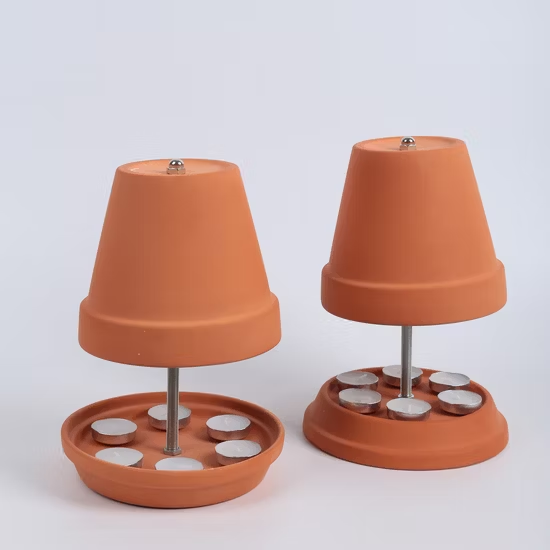
- Candles and Tea Lights: While they provide a small amount of heat and light, use them with extreme caution. Never leave open flames unattended. Tea light ovens (Teelichtöfen) can radiate a surprising amount of warmth but must be placed on heat-resistant surfaces.
- Body Heat: Gather everyone in the household into the designated “warm room.” Body heat significantly raises the temperature in a small, enclosed space.
Source: [1]
Layering up to protect yourself from cold
- The Onion Principle (Zwiebelprinzip): Wear multiple thin layers rather than one thick layer. Air trapped between layers acts as insulation.
- Base Layer: Thermal underwear or moisture-wicking synthetic fabrics. Avoid cotton if possible, as it holds moisture and makes you feel colder.
- Middle Layer: Fleece, wool, or a sweater to retain body heat.
- Outer Layer: A wind-resistant jacket if the house gets very cold.
- Protect Extremities: Wear a hat, thick socks, and gloves. A significant amount of body heat is lost through the head.
- Use Sleeping Bags: If you have winter camping gear or sleeping bags, get them out. Sitting inside a sleeping bag while on the sofa is much warmer than just using a blanket.
Always keep an emergency kit at home
The Federal Office of Civil Protection and Disaster Assistance (BBK) recommends that every household in Germany keep emergency supplies for at least 10 days.
Essential Items for Winter Outages:
- Warmth: Sleeping bags, wool blankets, and thermal clothing.
- Light: Battery-powered flashlights (with extra batteries), LED lanterns, and candles with matches or lighters.
- Information: A battery-powered radio (Kurbelradio) to receive official updates and weather reports.
- Food and Water: Non-perishable food that doesn’t require cooking and at least 2 liters of water per person per day.
- Cash: Electronic payment systems often fail during power outages. Keep a supply of small bills and coins.