
Key Takeaways
- Flour, milk, and beer recorded the largest long-term price increases since 2000. Their growth reflects higher energy costs, processing requirements, transport, and packaging across the supply chain.
- Grain- and dairy-based products were especially affected in the 2020s. Rising input costs, environmental standards, and financing pressures pushed prices structurally higher rather than temporarily.
- While individual price changes may seem small, their cumulative effect matters, as these staples are purchased frequently and form part of daily household spending.
Use this Visualization: You may use this image for free with proper attribution to GermanPedia (i.e., by linking back to GermanPedia).
Need help communicating complex ideas visually? We help you turn data into your most persuasive story. Contact us to learn more.
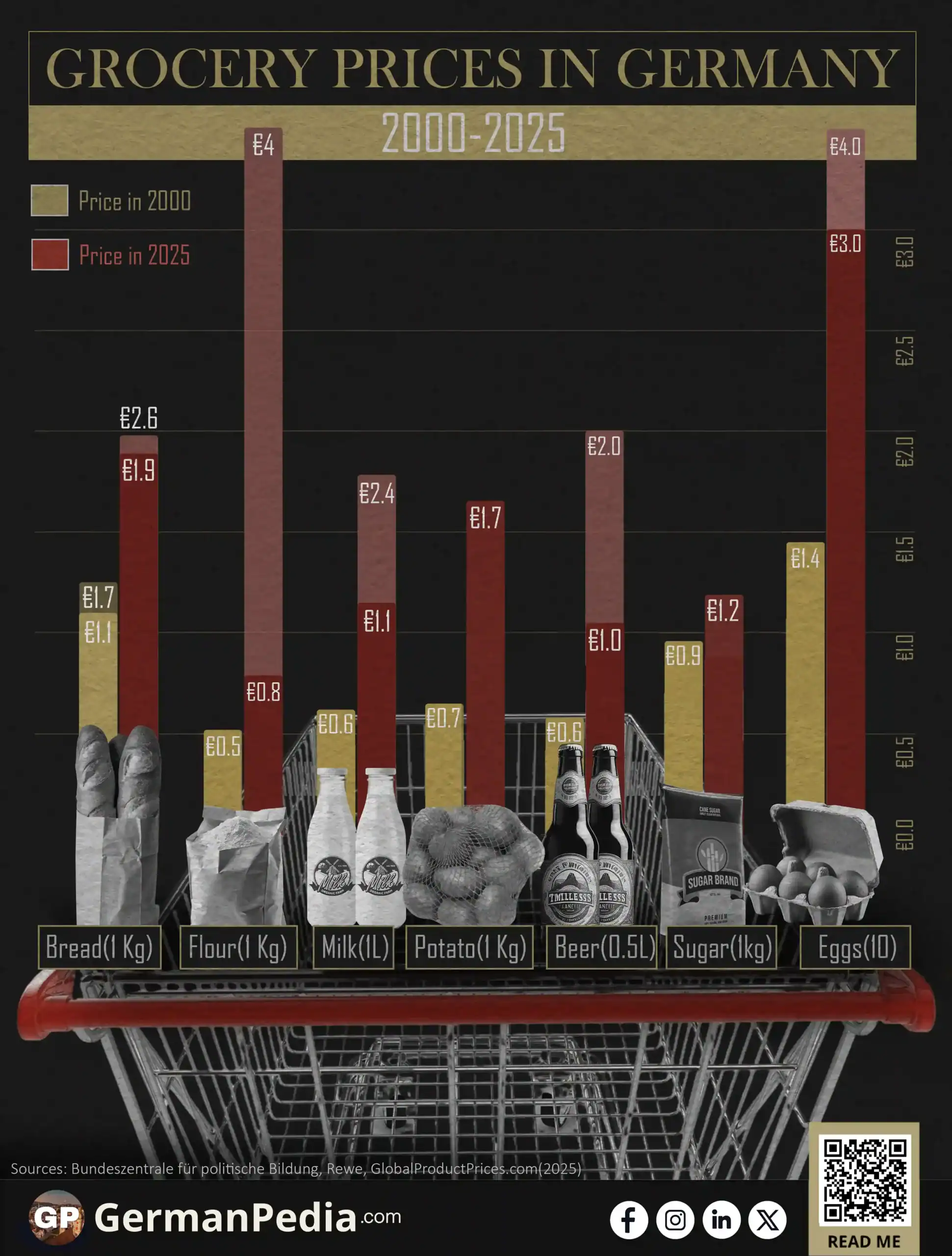
Over the past 25 years, grocery prices in Germany have climbed across nearly all everyday staples. However, the scale of increase varies for different products.
Changes in Grocery Prices in Germany (2000-2025)
| Product | Price in 2000 | Price in 2025 | Estimated % Change |
|---|---|---|---|
| Bread (1 Kg) | €1.1 to €1.68 (GermanPedia estimated the price using the flour price in 2000) | €1.89–€2.65 [3] | +13% to +141% |
| Flour (1kg) | €0.52 | €0.79 to €3.99 (depending on the brand and type of flour) | +52% to +667% |
| Milk (1 liter) | €0.62 | €1.15 to €2.39 | +85% to +285% |
| Potatoes (1kg) | €0.648 | €1.69 | +160% |
| Beer (0.5L) | €0.58 | €1.05 to €2 | +81% to +245% |
| Sugar (1kg) | €0.96 | €1.19 [5] | +24% |
| Eggs (10 eggs) | €1.45 | €3 to 4€ (depending on brand and type of egg) | +107% to +176% |
Sources: Bundeszentrale für politische Bildung, Rewe, GlobalProductPrices.com

Where Grocery Prices Have Jumped the Most
Looking at percentage changes, flour, milk, and beer show the largest price increases among the selected products.
Grain-based products, especially flour, saw particularly strong increases in the 2020s. Higher grain prices and energy-intensive processing are some of the factors that pushed costs up along the supply chain.
Milk and other dairy products also became significantly more expensive. This reflected higher feed costs, energy prices, stricter environmental standards, and rising financing costs.
Beer followed a similar path, with price increases tied to energy-heavy brewing, packaging materials, logistics, and fuel-related taxes.
Strong Price Increases, but Less Extreme
Other staples, including potatoes, eggs, and bread, also recorded clear price gains. Their increases were mainly shaped by higher fertilizer and energy costs, weather-related risks, and rising expenses on labor and logistics.
Bread prices rose alongside flour and energy costs. However, competition among bakeries and discounters, as well as differences in product quality, helped limit average price growth compared with the sharper increases seen in flour and dairy products.
Looking at individual price changes, some of these increases might not seem like much. But here’s the thing: people don’t buy groceries in isolation. These items show up in shopping baskets week after week, meal after meal.
The cost of putting food on the table has quietly but unmistakably increased. For many households, those accumulated cents and euros make a real difference in how far the monthly budget stretches.
More topics
- Top 25 Richest People in Germany (2025)
- Germany’s Smoking Rate Has Declined Over Two Decades
- Germany’s Electricity Mix: From Coal to Renewables
- Changes in Harvest of Germany’s Five Key Crops
- Top German Companies by Revenue
- Germany’s Top Car Brands by New Registrations
- Unemployment Across Germany: A Federal State Breakdown
- Where Germany’s Tourists Come From
- Germany’s Largest National Parks, Ranked by Size
- Which Federal States Drive Germany’s Economy?
- Divorces in Germany Are Falling — Here’s Why
- Germans Are Marrying Later Than Ever
- How Marriage Rates Have Fallen in Germany: 1990–2023
- How Germany’s Birth Rates Dropped and Deaths Rose
- Leading Causes of Death in Germany
References
- https://www.deutschland-in-daten.de/wp-content/uploads/deutschland_in_daten_14.pdf
- https://www.was-war-wann.de/historische_werte/brotpreise.html
- https://www.numbeo.com/food-prices/country_result.jsp?country=Germany
- https://www.globalproductprices.com/rankings/flour_prices/
- https://www.globalproductprices.com/germany/sugar_prices/