
Key takeaways
- In Q1 2026, the average asking rent in Germany reached €12.78 per square metre. It has increased by 24% from €10.31 in Q1 2021.
- Hamburg (€17.87) and Berlin (€17.86) have the highest average asking rents in Germany.
- Baden-Württemberg (€12.63) ranks highest among non-city states, reflecting strong regional income levels.
- Bremen (+35.9%) and Schleswig-Holstein (+30.2%) recorded some of the fastest rent growth since 2021. Smaller housing markets tend to react more quickly when demand rises. Moreover, regions near expensive cities often see rising rents as tenants move outward in search of lower prices.
- Several eastern states remain below the national average. However, rent growth on these states has still exceeded 20% over five years.
- Rent levels depend primarily on local demand, housing supply, and job concentration.
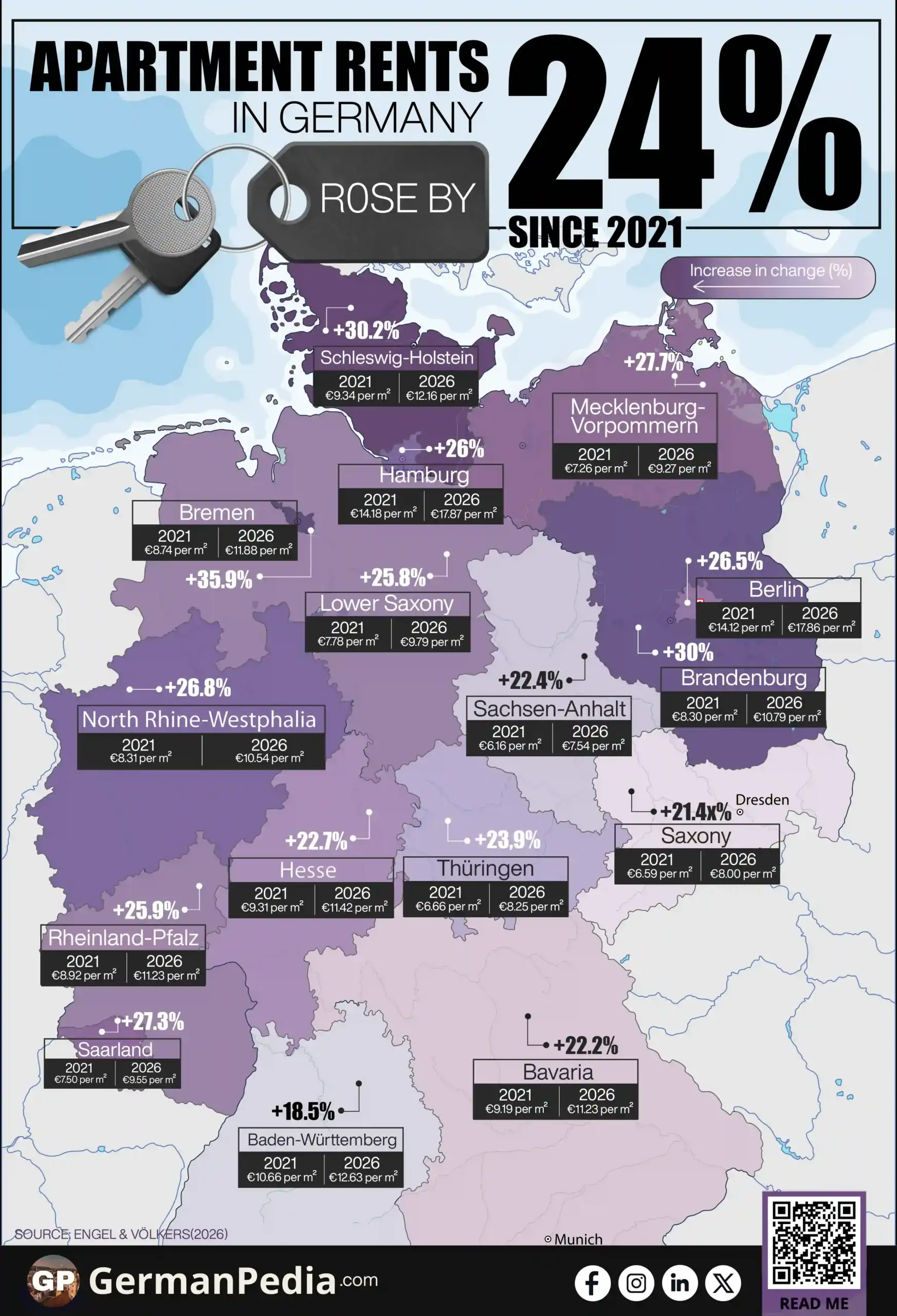
Use this Visualization: You may use this image for free with proper attribution to GermanPedia (i.e., by linking back to GermanPedia).
Need help communicating complex ideas visually? We help you turn data into your most persuasive story. Contact us to learn more.
Rent Index for German Apartments
| Rank | Federal State | Average Asking Price (In € per m²) | Change (%) | |
|---|---|---|---|---|
| Q1 2021 | Q1 2026 | |||
| 1 | Hamburg | 14.18 | 17.87 | +26.0% |
| 2 | Berlin | 14.12 | 17.86 | +26.5% |
| 3 | Baden-Württemberg | 10.66 | 12.63 | +18.5% |
| 4 | Schleswig-Holstein | 9.34 | 12.16 | +30.2% |
| 5 | Bremen | 8.74 | 11.88 | +35.9% |
| 6 | Hessen | 9.31 | 11.42 | +22.7% |
| 7 | Bayern | 9.19 | 11.23 | +22.2% |
| 8 | Rheinland-Pfalz | 8.92 | 11.23 | +25.9% |
| 9 | Brandenburg | 8.30 | 10.79 | +30.0% |
| 10 | Nordrhein-Westfalen | 8.31 | 10.54 | +26.8% |
| 11 | Niedersachsen | 7.78 | 9.79 | +25.8% |
| 12 | Saarland | 7.50 | 9.55 | +27.3% |
| 13 | Mecklenburg-Vorpommern | 7.26 | 9.27 | +27.7% |
| 14 | Thüringen | 6.66 | 8.25 | +23.9% |
| 15 | Sachsen | 6.59 | 8.00 | +21.4% |
| 16 | Sachsen-Anhalt | 6.16 | 7.54 | +22.4% |
Source: Engel & Völkers

In the first quarter of 2026, the average asking rent for apartments in Germany reached €12.78 per square metre. Back in Q1 2021, it was €10.31. That’s a 24% increase in five years.
Rent rates have definitely moved, and where you live still makes a big difference.
The city-states are at the top of the ranking:
- Hamburg — €17.87 per m²
- Berlin — €17.86 per m²
These states are dense, high-demand city markets. They are strong job centres with limited housing supply and a steady inflow of students, professionals, creatives, and remote workers. Prices move upward when demand keeps rising, and new housing expands slowly
Tips on Finding a Rental Property in Germany ->
Next comes Baden-Württemberg (€12.63), followed closely by Schleswig-Holstein (€12.16) and Bremen (€11.88).
Baden-Württemberg’s rent level reflects its strong southern economy: automotive, engineering, and high-income employment.
Germany’s Median Wage by Federal State ->
But the more interesting story is growth.
Since Q1 2021, Bremen (+35.9%) and Schleswig-Holstein (+30.2%) have recorded among the fastest rent increases in Germany.
Smaller markets react more quickly when demand rises. And regions near expensive cities often absorb spillover demand. These refer to renters who want access to Hamburg or Berlin but at lower prices outside the city core.
At the lower end of the ranking are:
- Sachsen-Anhalt — €7.54 (+22.4%)
- Thüringen — €8.25 (+23.9%)
- Mecklenburg-Vorpommern — €9.27 (+27.7%)
These states remain below the national average, but they still show rent growth over the years.
Lower starting prices do not mean static markets. Even in more affordable regions, rising demand and limited new construction are pushing rents upward.
Asking rents reflect a few simple forces:
- The strength of local job markets
- The pace of housing construction
- Demand spilling over from nearby cities
Germany’s rental market is not defined by a single national story. It combines high-priced metropolitan hubs with regional markets that are catching up. Ultimately, what tenants pay depends on how tight their local housing market is.
More topics
- Renting in Germany
- Rental Deposit (Kaution) in Germany
- Rent Increase in Germany [Tenant Rights And Regulations]
- Rental Property Scams in Germany
- Rental Contracts in Germany
- 7 Tips on Finding a Rental Property in Germany
- 12 Mistakes Foreigners Make While Living in Germany
- Unemployment Across Germany: A Federal State Breakdown
- Top German Companies by Revenue
- Germany’s Largest National Parks, Ranked by Size
- Which Federal States Drive Germany’s Economy?
- Here’s Why Divorces in Germany Are Falling
- Germans Are Marrying Later Than Ever
- How Marriage Rates Have Fallen in Germany: 1990–2023
- How Germany’s Birth Rates Dropped and Deaths Rose
- Leading Causes of Death in Germany