
Key Takeaways
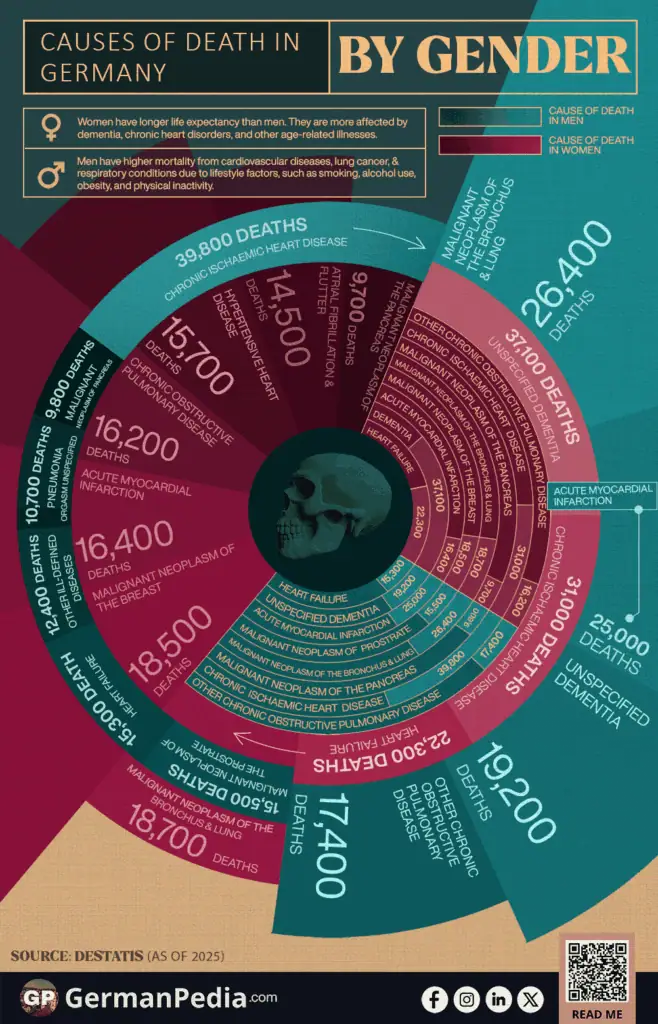
- Men have higher mortality from cardiovascular diseases, lung cancer, and respiratory conditions. This is mainly caused by lifestyle factors, such as smoking, alcohol use, obesity, and physical inactivity.
- Women have longer life expectancy than men. They are more affected by dementia, chronic heart disorders, and other age-related illnesses.
- Across both genders, circulatory diseases and malignant neoplasms remain the two largest cause groups in Germany. Together, they account for more than half of all deaths.
Use this Visualization: You may use this image for free with proper attribution to GermanPedia (i.e., by linking back to GermanPedia).
In 2024, Germany recorded 1,007,758 deaths, a slight 2% decrease from the previous year. While men and women face many of the same major health risks, the way these diseases affect them is far from equal.
Here is a data-driven look at how mortality differs between men and women.
Leading causes of death for men
| Cause of Death in Men | Number of deaths (in Thousands) |
| Chronic ischaemic heart disease | 39.8 |
| Malignant neoplasm of the bronchus & lung | 26.4 |
| Acute myocardial infarction | 24.9 |
| Unspecified dementia | 19.2 |
| Other chronic obstructive pulmonary disease | 17.4 |
| Malignant neoplasm of the prostate | 15.5 |
| Heart failure | 15.3 |
| Other ill-defined and unspecified causes of mortality | 12.4 |
| Pneumonia, organism unspecified | 10.7 |
| Malignant neoplasm of the pancreas | 9.8 |
Source: Destatis

Among men, heart disease remains the dominant threat. It caused 39,800 deaths in 2024. Lung cancer follows closely with 26,400 deaths.
These patterns are linked to lifestyle factors:
- Smoking
- Alcohol consumption
- Obesity
- Physical inactivity
These risks are amplified for men in lower socioeconomic groups and in structurally weaker regions such as parts of eastern Germany, where unemployment, lower education attainment, and more hazardous manual occupations are associated with the factors mentioned above.
Leading causes of death for women
| Cause of Death in Women | Number of deaths (in Thousands) |
| Unspecified dementia | 37.1 |
| Chronic ischaemic heart disease | 31.0 |
| Heart failure | 22.3 |
| Malignant neoplasm of the bronchus & lung | 18.7 |
| Malignant neoplasm of the breast | 18.5 |
| Acute myocardial infarction | 16.4 |
| Other chronic obstructive pulmonary disease | 16.2 |
| Hypertensive heart disease | 15.7 |
| Atrial fibrillation and flutter | 14.5 |
| Malignant neoplasm of the pancreas | 9.7 |
Source: Destatis
Life expectancy in Germany has risen for both men and women over time [2]. However, women are projected to live longer than men. This means their leading causes of death are more strongly linked to age-related conditions. Dementia, chronic pulmonary disorders, and neurological diseases appear far more prominently in female mortality.
Regardless of gender, circulatory system diseases and malignant neoplasms remain the two leading broad cause groups of death in Germany. Together, they account for more than half of all deaths in Germany.
As more people reach older ages, long-term strain on the heart, blood vessels, and cells becomes more visible. These stresses often manifest later in life as heart attacks, strokes, and various cancers. Major contributing factors include:
- harmful alcohol use
- high blood pressure
- high cholesterol
- smoking
- obesity
- physical inactivity
More topics
- Highest Paying Jobs in Germany
- Popular Study Destinations for German Students
- Educational Attainment in European Countries
- Grocery Prices in Germany Have Increased Since 2000
- Germany’s Smoking Rate Has Declined Over Two Decades
- Germany’s Electricity Mix: From Coal to Renewables
- Changes in Harvest of Germany’s Five Key Crops
- Top German Companies by Revenue
- Germany’s Top Car Brands by New Registrations
- Unemployment Across Germany: A Federal State Breakdown
- Where Germany’s Tourists Come From
- Germany’s Largest National Parks, Ranked by Size
- Which Federal States Drive Germany’s Economy?
- How Marriage Rates Have Fallen in Germany: 1990–2023
- Leading Causes of Death in Germany